Tema de búsqueda: fungus gnats houseplants guide
Why Are Fungus Gnats Around My Houseplants? How to Fix Wet Soil, Saucer Water, and Surface Debris
A practical English guide to fungus gnats around houseplants, including how wet soil, trapped saucer water, fallen leaves, and surface moisture create the problem, plus the safest order of fixes for beginners.
Puntos clave
- Why fungus gnats usually point to a moisture and cleanup problem around the pot
- How wet soil, trapped runoff, and fallen organic matter support repeat outbreaks
- What to correct before relying only on sprays or traps
- How to make the pot dry in a cleaner, easier-to-read rhythm
Respuesta rápida
Fungus gnats around houseplants are usually a sign that moisture and cleanup around the pot need attention. Focus on stopping the conditions that support them, not only on killing the visible adults.
If the soil dries more clearly, runoff is removed, and the surface stays cleaner, the plant setup becomes easier to manage and repeat outbreaks become much less likely.
Tabla de contenidos
- How to tell whether the pot is really the source
- Why wet soil and trapped saucer water matter so much
- Surface debris is a small detail with a big effect
- The safest order of immediate fixes
- How to prevent the problem from coming back
- Preguntas frecuentes
- Conclusión
When tiny gnats start hovering around a houseplant, the first reaction is usually to get rid of the insects as fast as possible. That makes sense, but in many homes the bigger issue is not the flying adults. It is the damp surface conditions that keep allowing new ones to appear.
Fungus gnat problems often build slowly. Soil that stays wet, saucers that hold runoff, fallen leaves on the surface, and repeated light wetting can create a pot environment that stays inviting longer than beginners realize. This guide explains how to read that setup and correct it in a practical order.
How to tell whether the pot is really the source
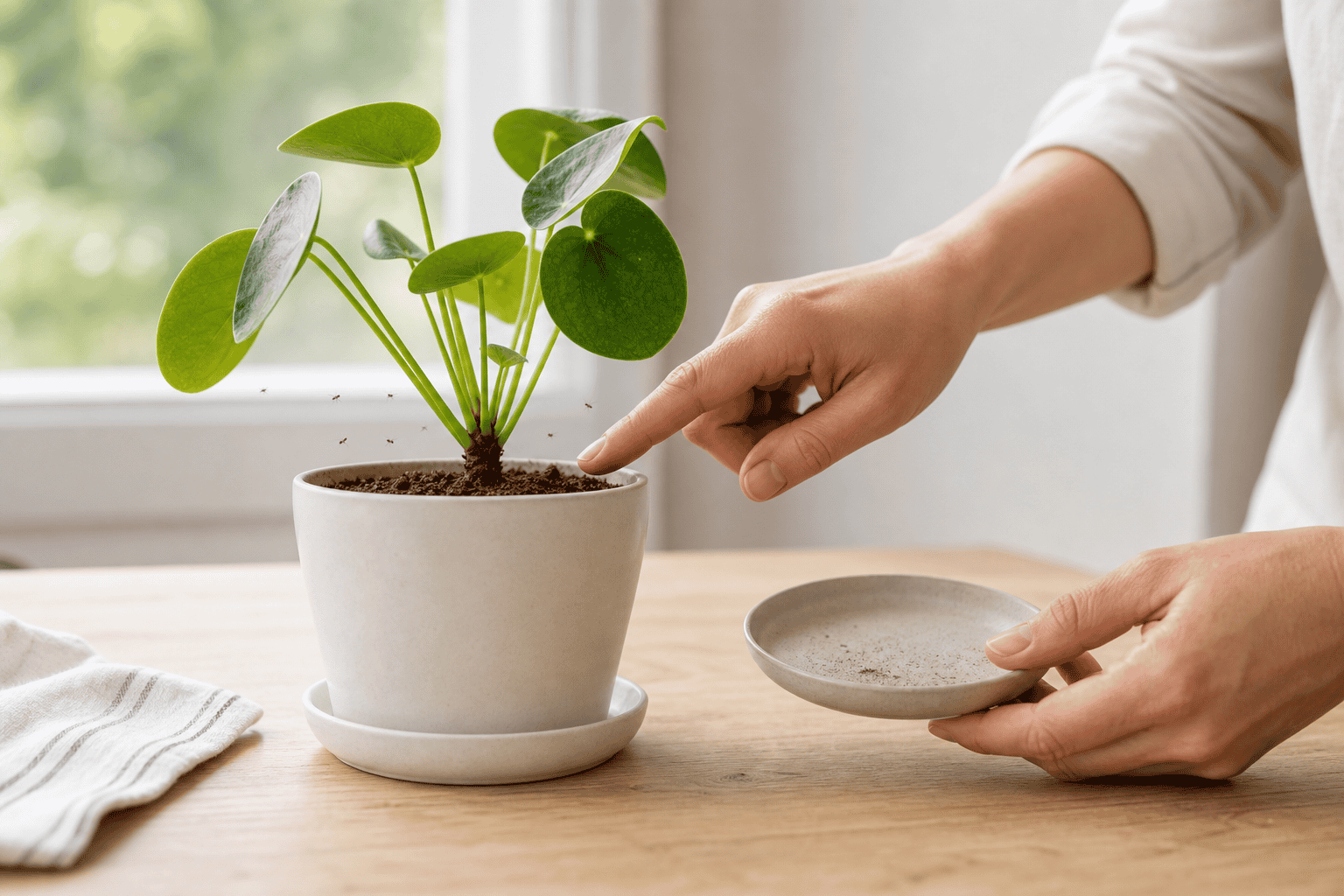
Fungus gnats linked to houseplants often stay low around the container, rise when the soil is touched, and appear more around one or two specific pots than in the whole room. That pattern is more useful than trying to identify the insect perfectly at first glance.
The main question is whether the pot offers a place for repeated breeding. If the surface remains damp for long periods, runoff sits underneath, or debris stays on top of the mix, the container itself may be supporting the cycle.
Why wet soil and trapped saucer water matter so much
The most important correction is not to keep the soil constantly moist without reason. When beginners water again before the pot has really lightened, or leave runoff in a saucer or cachepot, the lower and upper parts of the container can both stay wet longer than expected.
That does not only raise root-stress risk. It also makes the pot more welcoming to fungus gnats. In warm indoor conditions, even small habits like leftover runoff can keep the cycle going.
Surface debris is a small detail with a big effect
Dead leaves, old flower parts, spilled soil residue, and leftover fertilizer pieces on the surface can quietly support the problem. Keeping the top of the pot clean is simple, but it changes the environment more than many beginners expect.
It also helps to separate leaf misting from soil moisture. Lightly wetting the top of the mix again and again can maintain the exact thin damp layer that gnats like, even when the plant itself did not need more moisture.
The safest order of immediate fixes
Start by pausing extra watering, emptying any trapped water, removing debris from the surface, and washing the saucer. Then move the plant toward a brighter spot with gentle airflow if the current place feels stagnant. Sticky traps can help reduce the visible adults and make progress easier to judge.
What usually works poorly is treating only the insects while leaving the pot heavy and damp. Sprays and traps may reduce numbers for a while, but the problem often returns if the pot conditions stay the same.
How to prevent the problem from coming back
Long-term prevention depends on helping the top of the pot dry in a normal cycle, keeping runoff from sitting under the container, and removing decaying material quickly. Pot size, old compacted mix, and very stagnant corners can all make that harder.
A cleaner drying rhythm does more than control gnats. It also supports healthier roots and makes other moisture-related problems easier to catch earlier.
Preguntas frecuentes
Do I need to throw away all the soil if fungus gnats appear?
Not always. First correct watering, trapped runoff, and surface debris. Repotting is more useful when the problem is severe, smelly, or tied to a potting mix that stays wet too long.
Will insect spray solve the issue quickly?
It can reduce adults temporarily, but the problem often returns if the soil stays damp and the breeding conditions remain.
Are fungus gnats only a summer problem?
Warm seasons make them more active, but they can still appear indoors whenever moist soil and organic debris stay in place long enough.
Conclusión
Fungus gnats around houseplants are usually a sign that moisture and cleanup around the pot need attention. Focus on stopping the conditions that support them, not only on killing the visible adults.
If the soil dries more clearly, runoff is removed, and the surface stays cleaner, the plant setup becomes easier to manage and repeat outbreaks become much less likely.