Tema de búsqueda: houseplant white mold soil guide
White Mold on Houseplant Soil? How to Tell What Is Harmless and What to Fix
A practical English guide to white mold on houseplant soil, including how to tell surface mold from harmless white particles, what to do first, and how to stop the damp conditions that make it return.
Puntos clave
- Why white mold on the soil surface is often a moisture warning first
- How to tell actual mold from fertilizer granules or mineral residue
- What beginners should do before reaching for drastic fixes
- Which room and watering habits usually make the problem return
Respuesta rápida
White mold on houseplant soil is often manageable, but it should not be ignored. It usually tells you that the pot is staying damp in a way that can eventually confuse watering decisions or stress the roots.
The best fix is usually simple: remove the top layer, improve the drying rhythm, and make the environment easier for the plant and harder for surface mold.
Tabla de contenidos
- White mold usually means the surface is staying too damp
- How to tell mold from harmless white particles
- The safest first response
- Why the mold comes back
- When you should think beyond surface cleanup
- Preguntas frecuentes
- Conclusión
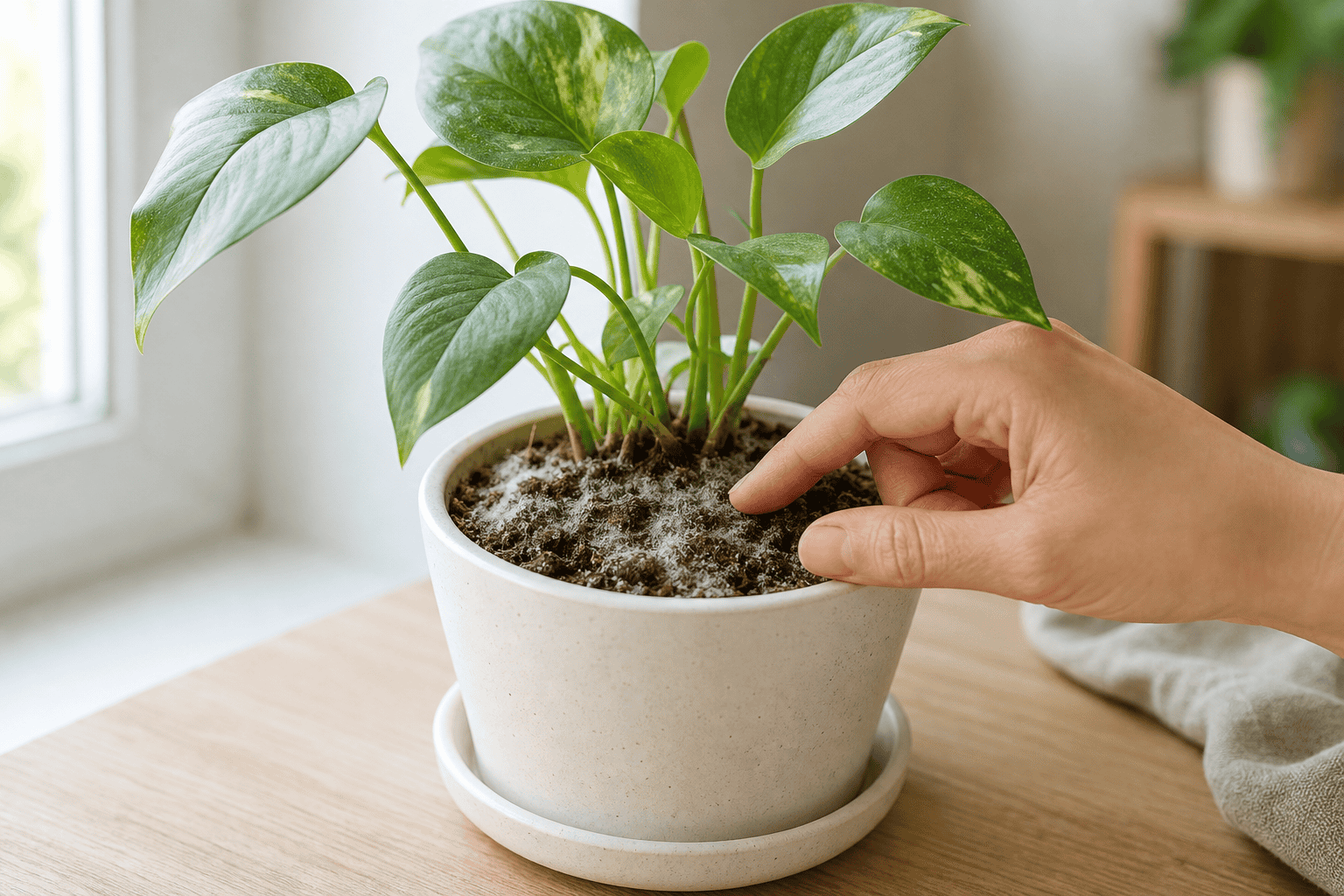
Seeing white fuzzy growth on the surface of your houseplant soil can feel alarming, especially if the plant looked normal just a day or two earlier. Many beginners immediately worry that the plant is sick or that all the soil must be replaced at once.
In many indoor setups, white mold on the surface is less a sudden disaster and more a visible sign that the pot has been staying damp too long. This guide explains how to identify it, how to respond safely, and how to correct the conditions that usually cause it.
White mold usually means the surface is staying too damp
White mold on the top layer of soil often appears when moisture lingers near the surface, airflow is weak, or watering happens before the pot has moved through a full dry cycle. It is often more about conditions than immediate plant damage.
That matters because the right response is not only removing the mold, but also making the pot easier to dry and easier to read.
How to tell mold from harmless white particles
Real mold tends to look soft, fuzzy, or thread-like and may spread across the soil in patches. Fertilizer pellets, perlite, or mineral marks usually keep a clearer shape and do not form a connected cottony layer.
If you are unsure, compare the texture and whether it seems to return more strongly when the surface stays wet.
The safest first response
A practical first step is to remove the top affected layer lightly, improve airflow, empty any leftover water, and wait a bit longer before the next watering. Those changes often solve the problem without disturbing the roots.
Beginners usually do better with this calm sequence than with immediately replacing all the soil or overusing treatments.
Why the mold comes back
Recurrence usually points to the same root conditions: oversized pots, fine slow-drying soil, trapped water in saucers or cachepots, or rooms where air barely moves. The mold is visible, but the drying pattern is the real issue.
If the pot stays heavy for too long, the problem is bigger than the white layer you can see on top.
When you should think beyond surface cleanup
If you notice bad smell, repeated outbreaks, yellowing leaves, or a pot that remains wet for many days, it is worth checking for deeper over-wet conditions or root stress. In those cases, the mold may be warning you early about a more important problem.
Treat the surface as a clue. The goal is to understand why the soil is staying favorable to mold in the first place.
Preguntas frecuentes
Is white mold on houseplant soil immediately dangerous?
Not always. Surface mold alone often means the top layer has stayed damp too long, though it is still worth correcting the conditions that caused it.
Do I need to replace all the soil every time I see it?
Usually no. Start by removing the surface mold and improving airflow and drying rhythm before deciding on a full soil change.
How do I tell mold from white granules in the mix?
Mold looks fuzzy or thread-like and spreads in a connected layer, while fertilizer granules or perlite keep a clearer particle shape.
Conclusión
White mold on houseplant soil is often manageable, but it should not be ignored. It usually tells you that the pot is staying damp in a way that can eventually confuse watering decisions or stress the roots.
The best fix is usually simple: remove the top layer, improve the drying rhythm, and make the environment easier for the plant and harder for surface mold.