Khoj vishay: sticky houseplant leaves guide
Why Do Houseplant Leaves Feel Sticky? How to Separate Honeydew, Guttation, and Sap
A practical English guide to sticky houseplant leaves, including how to tell pest honeydew apart from guttation or sap, what other signs to check on stems and leaf undersides, and what order of cleanup and correction is safest for beginners.
Mukhya baatein
- The three most common reasons houseplant leaves feel sticky
- How to tell pest honeydew apart from guttation or minor sap leaks
- What extra signs on leaf undersides, stems, and nearby surfaces help narrow the cause
- Why wiping the leaves is useful but not enough on its own
Tez jawab
Sticky houseplant leaves are usually easiest to understand when you separate three main possibilities: pest honeydew, guttation, and localized sap from damage. The residue may look similar at first, but the pattern around the plant usually tells the story.
If you wipe the surface, inspect leaf undersides carefully, and adjust care only after you know what you are seeing, you can solve the problem with much less guesswork and much less risk of making it worse.
Is page mein kya hai
- The first causes to suspect when leaves feel sticky
- How to separate honeydew from guttation
- Other signs that help narrow the problem
- The safest order of response
- How to reduce repeat stickiness
- Sawal-jawab
- Nishkarsh
Sticky residue on houseplant leaves can feel mysterious because the plant may still look mostly healthy at first. Many beginners are not sure whether they are dealing with dirt, disease, or something much more serious.
In practice, sticky leaves usually point to one of a few causes: honeydew from sap-sucking pests, moisture pushed out through the leaves, or sap from a damaged stem or leaf. This guide explains how to sort those possibilities without overreacting.
The first causes to suspect when leaves feel sticky
The most important cause to rule out first is honeydew from pests such as scale insects, aphids, or mealybugs. These insects feed on plant sap and can leave a shiny or tacky residue on leaves, stems, pots, and even shelves below the plant.
Sticky leaves are not always a pest emergency, though. Some plants also produce guttation, where excess moisture appears at the leaf edge or along veins and dries into a slightly sticky residue. Fresh sap from a cut or damaged stem can look similar in a smaller local area.
How to separate honeydew from guttation
The fastest clue is where the residue appears and whether insects are present on the underside of leaves or around stem joints. Honeydew often shows up across multiple leaves and may be accompanied by tiny insects, white cottony spots, or dark sooty film developing later.
Guttation is more likely when the plant was watered recently, the room stayed humid overnight, and you notice droplets mainly in the morning. If the leaves otherwise look calm and you cannot find pests under close inspection, guttation becomes more plausible.
Other signs that help narrow the problem
If sticky leaves also come with yellowing, distorted new growth, dull color, or black sooty patches, pest activity moves higher on the list. These patterns suggest the residue is not just harmless moisture but part of a broader stress signal.
If the stickiness is limited to a pruning point or a recently bent stem, sap from minor damage may be enough to explain it. In that case, the residue usually stays local instead of spreading widely through the plant.
The safest order of response
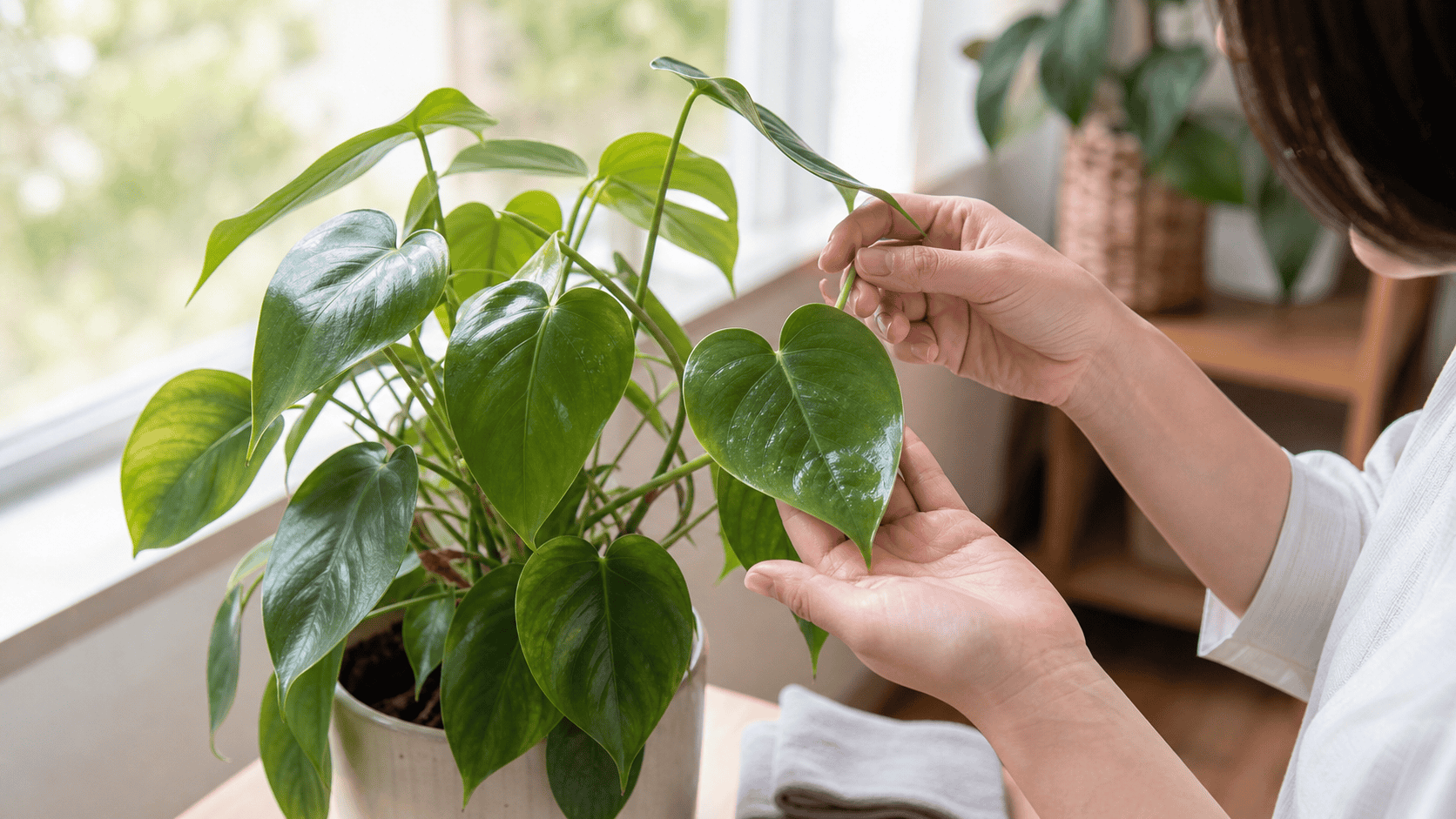
Start by wiping the sticky surfaces with a soft damp cloth so you can see what is fresh and what returns later. Then inspect leaf undersides, stem joints, and hidden corners before deciding whether the issue is pest-related or simply a moisture pattern that needs adjustment.
If pests are present, isolate the plant and remove what you can early while the population is still small. If guttation seems more likely, focus on watering rhythm, overnight moisture, and general airflow instead of jumping straight to repotting or chemical treatment.
How to reduce repeat stickiness
Prevention usually comes from regular observation rather than dramatic rescue steps. Wiping leaves occasionally, checking the undersides during routine care, and avoiding long periods of stale wet conditions all make sticky residue easier to catch and less likely to spread.
It also helps not to overfeed or overwater a plant just because it seems slightly off. Stable light, readable drying cycles, and cleaner leaf surfaces give you much better odds of noticing the real issue before it becomes harder to control.
Sawal-jawab
Do sticky houseplant leaves mean I need to repot immediately?
Usually no. It is better to identify whether the residue comes from pests, guttation, or sap before making a disruptive change like repotting.
Is wiping the sticky residue enough to fix the issue?
No. Wiping helps you monitor the plant, but pest honeydew or moisture imbalance will usually return unless the underlying cause is addressed.
Can leaves feel sticky even if I cannot see insects?
Yes. Guttation and sap can also create a sticky feel, although tiny pests are easy to miss, so a close inspection is still worth doing.
Nishkarsh
Sticky houseplant leaves are usually easiest to understand when you separate three main possibilities: pest honeydew, guttation, and localized sap from damage. The residue may look similar at first, but the pattern around the plant usually tells the story.
If you wipe the surface, inspect leaf undersides carefully, and adjust care only after you know what you are seeing, you can solve the problem with much less guesswork and much less risk of making it worse.