Khoj vishay: houseplant soil staying wet guide
Why Is My Houseplant Soil Staying Wet? How to Fix Slow-Drying Pots Before Root Trouble Starts
A practical English guide to houseplant soil that stays wet too long, including how pot size, dense mix, trapped saucer water, and weak airflow slow drying, plus the safest first fixes for beginners.
Mukhya baatein
- Why slow-drying soil is usually a setup problem rather than a one-time mistake
- How oversized pots, dense mix, weak airflow, and trapped water delay drying
- What beginners should check before assuming the plant is simply thirsty
- The safest recovery order before wet roots turn into deeper root stress
Tez jawab
Slow-drying houseplant soil is usually a sign that the pot, the mix, and the room are not working together well. Treat it as a setup clue, not only as a watering mistake.
If you stop adding water, remove trapped moisture, and make the drying rhythm easier to read, you can often correct the problem before it turns into deeper root trouble.
Is page mein kya hai
- Start by checking the whole pot, not only the surface
- How oversized pots and dense soil keep moisture around
- Placement and trapped water are often the hidden reason
- What not to do when the soil will not dry
- What to change at the next repotting
- Sawal-jawab
- Nishkarsh
When a houseplant pot stays wet for days, beginners often feel pulled in two directions. One thought is that waiting longer is safe. The other is that root rot must be starting already. Both reactions can be understandable, especially when the top of the soil looks dry while the center of the pot still feels heavy.
Slow-drying soil is usually not caused by watering volume alone. Pot size, soil texture, leftover water under the pot, weak light, poor airflow, and seasonal humidity can all stretch the wet phase longer than expected. This guide focuses on how to read that situation early and what to correct first.
Start by checking the whole pot, not only the surface
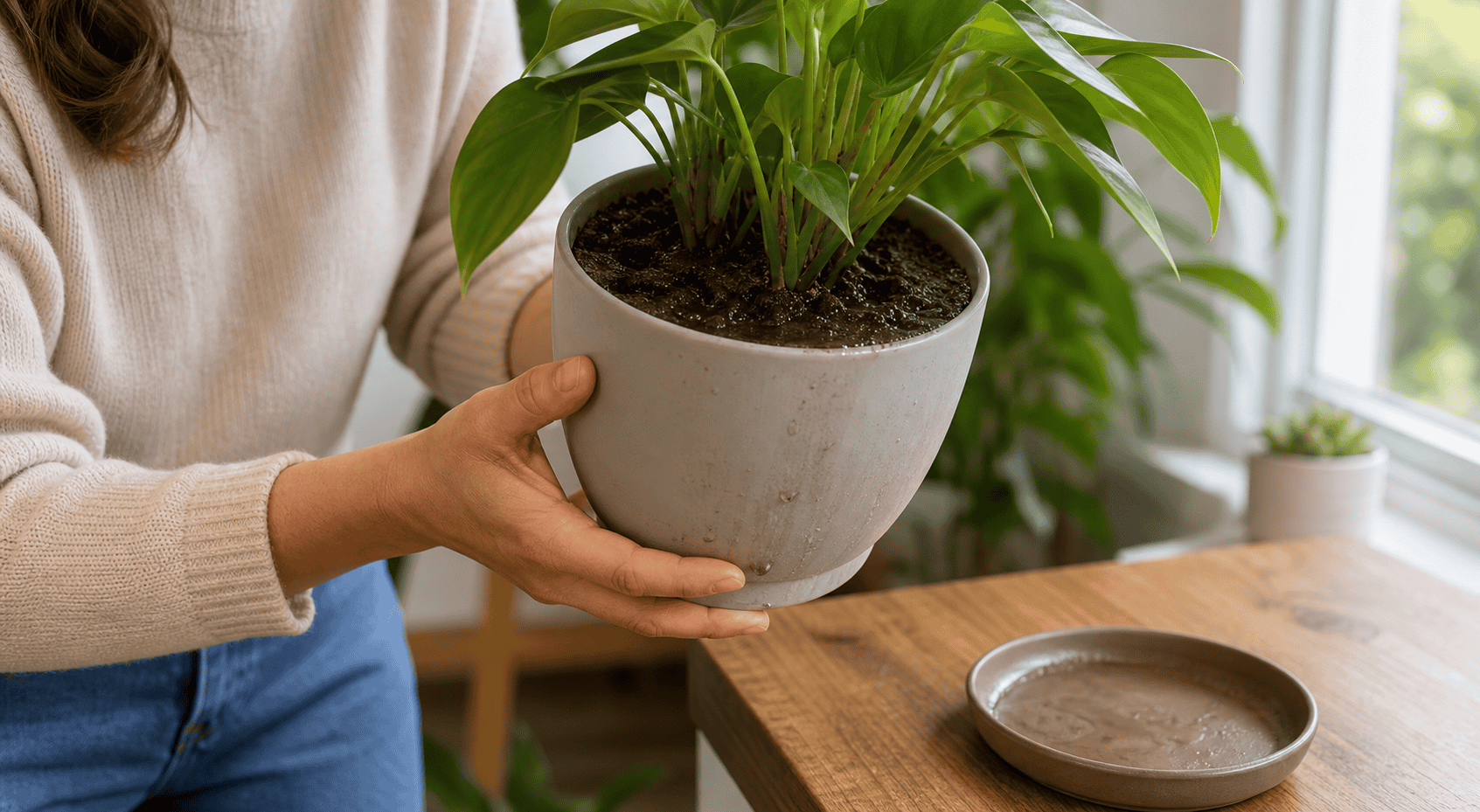
The surface color can be misleading indoors. In many rooms, the top layer dries first while the root zone underneath stays damp much longer. That is why pot weight, smell, and whether moisture still lingers near the drain hole matter more than a dry-looking top layer.
It also helps to ask whether the pot is drying only a little slower than usual or barely changing at all. Seasonal shifts can slow things down, but a container that remains heavy for too long often points to a setup mismatch.
How oversized pots and dense soil keep moisture around
A pot that is much larger than the root ball can hold more moisture than the plant is ready to use. The lower part of the container may stay wet for a long time because the roots are not yet occupying that zone strongly enough.
Dense or aging soil makes that harder. As potting mix breaks down, airflow drops and water stays trapped more easily. In many cases, the better long-term fix is a better pot-to-root ratio and a more breathable mix, not simply waiting longer.
Placement and trapped water are often the hidden reason
Weak airflow, low usable light, decorative cachepots, and leftover saucer water can all keep the bottom of the pot wetter than people realize. A plant may look fine above the soil while the lower root zone remains in a stale damp cycle.
This is one of the most common indoor mistakes because it is easy to believe watering ended once runoff appeared. If that water stays underneath the pot, the wet phase is still continuing.
What not to do when the soil will not dry
The biggest mistake is adding more water because the leaves look slightly tired. Wet roots can make foliage appear limp too, so the visual signal is easy to misread. Fertilizer and tonics are also poor first responses when the container is still heavy and damp.
A safer order is to pause watering, empty any trapped water, move the plant into brighter gentle conditions with better airflow, and then watch whether the pot begins to lighten. That sequence removes extra stress instead of stacking more on top.
What to change at the next repotting
If this keeps happening, review the pot size, the drain-hole design, and the texture of the mix at the next repot. A slightly smaller, more proportional setup is often easier for beginners to read and manage.
It also helps to note how many days the pot takes to dry in each season. Observation makes the next choice smarter than trying to memorize one fixed schedule.
Sawal-jawab
Should I repot right away if the soil is not drying?
Not always. First stop watering, empty trapped water, and improve placement and airflow. Repot sooner only if smell, yellowing, or decline suggests deeper root stress.
Is it normal for the surface to dry while the inside stays wet?
Yes, especially indoors. That is why pot weight and deeper moisture matter more than the appearance of the top layer alone.
Will a fan solve the problem quickly?
Gentle airflow can help, but strong direct wind can add leaf stress. Aim for a calmer brighter setup rather than blasting the plant.
Nishkarsh
Slow-drying houseplant soil is usually a sign that the pot, the mix, and the room are not working together well. Treat it as a setup clue, not only as a watering mistake.
If you stop adding water, remove trapped moisture, and make the drying rhythm easier to read, you can often correct the problem before it turns into deeper root trouble.