Khoj vishay: brown leaf tips houseplants guide
Why Are My Houseplant Leaf Tips Turning Brown? How to Read Dry Air, Underwatering, and Fertilizer Stress
A practical English guide to brown leaf tips on houseplants, including how to separate dry air from true underwatering, when fertilizer buildup or root crowding may be involved, and what order of fixes is safest for beginners.
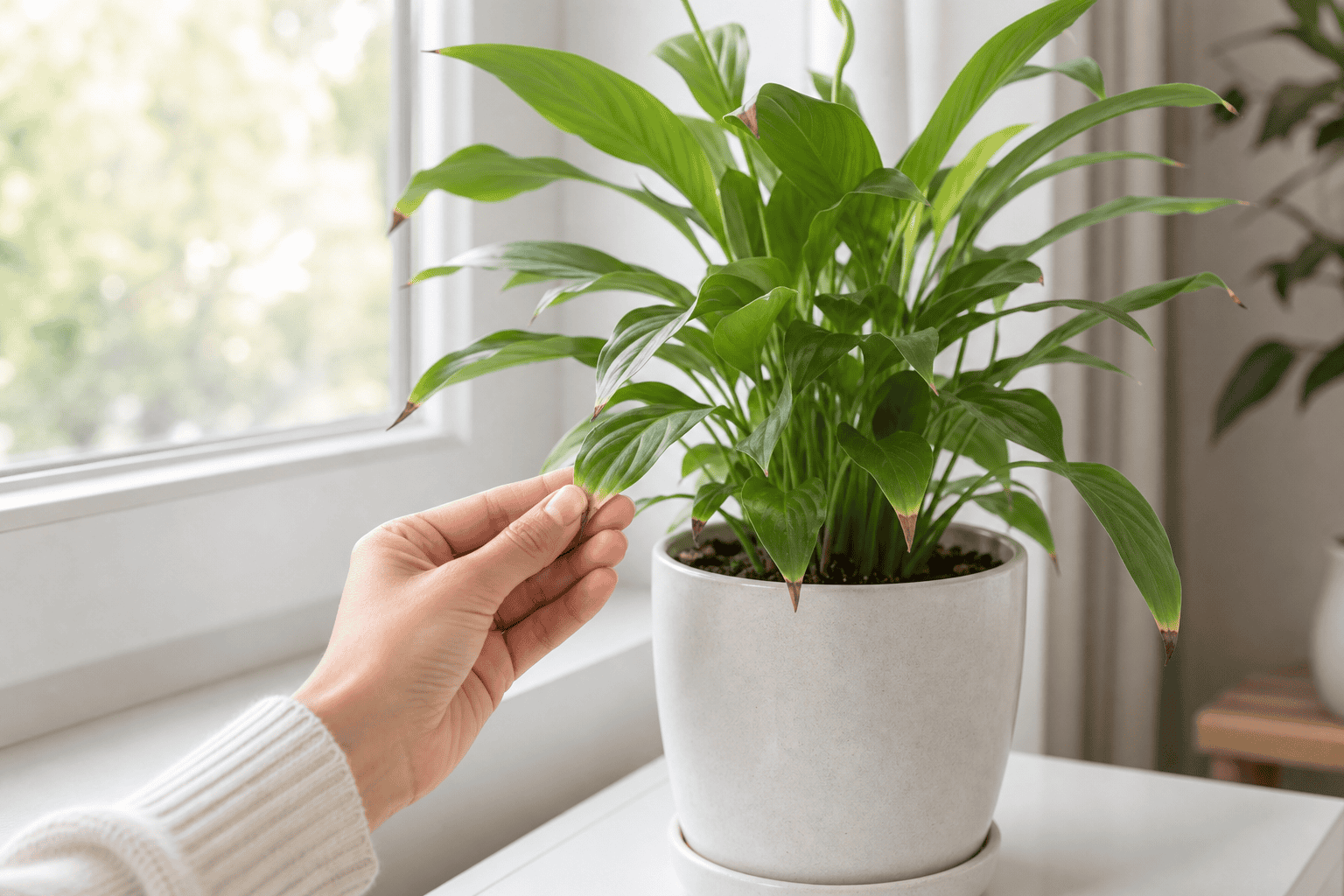
Mukhya baatein
- What brown leaf tips usually mean before a plant looks broadly unhealthy
- How to tell dry air and airflow stress apart from true underwatering
- When fertilizer strength, mineral buildup, or root crowding may be part of the problem
- What order of corrections helps beginners avoid making the issue worse
Tez jawab
Brown houseplant leaf tips are usually a signal to review the care pattern rather than to panic. Dry air, inconsistent watering, fertilizer concentration, and root crowding can all create a similar-looking symptom at the edge of the leaf.
If you calm the environment first, restore a readable watering rhythm, and only then investigate fertilizer or root issues, the plant is much less likely to be pushed from a mild problem into a bigger one.
Is page mein kya hai
- What to check first when only the tips are brown
- How to separate dry air from real underwatering
- When fertilizer, water quality, or root crowding may be involved
- The safest order of fixes
- How to reduce repeat browning over time
- Sawal-jawab
- Nishkarsh
Brown leaf tips are one of the most common houseplant symptoms because they sit in the middle zone between cosmetic damage and a real care mismatch. Many beginners assume the plant simply needs more water, but that guess can make the problem harder to read.
Leaf tips often react first to dry air, direct airflow, inconsistent drying cycles, fertilizer concentration, or roots that have become too crowded in the pot. This guide explains how to sort those causes in a practical order and how to respond without overcorrecting.
What to check first when only the tips are brown
The first clue is the pattern. If the damage begins at the tip or along the edge and stays fairly crisp and dry, the issue is often linked to moisture balance or environmental dryness rather than a dramatic one-time event.
That is different from classic leaf scorch, where stronger light can bleach or brown a broader patch quickly. Pattern matters because it helps you decide whether to review airflow and watering rhythm first or light intensity first.
How to separate dry air from real underwatering
A plant that is truly underwatered often has a light pot and may also show some soft drooping. A plant with brown tips from dry air or direct vent stress may still have a pot that is not especially dry, even though the leaf edges are crisping.
This is why morning checks are useful. Pot weight, soil feel, and how the leaves look before midday heat or airflow build up will usually tell you more than a quick glance later in the day.
When fertilizer, water quality, or root crowding may be involved
If tip browning continues even after you soften the room conditions, look at what has been happening inside the pot. Strong fertilizer, frequent feeding, trapped runoff, or a rootbound plant can all make water movement less stable and stress the leaf edges first.
Tap water alone is not always the main villain, but visible residue on the soil surface or pot rim can be a sign that salts or minerals are building up faster than the current setup can handle comfortably.
The safest order of fixes
Start by removing direct vent paths, harsh heat, or strong late sun. Then return watering to a clearer dry-cycle pattern based on pot weight instead of reacting emotionally to the damaged tips. If the symptom still continues, pause extra fertilizer and review whether the roots may be crowded.
What helps less is changing everything at once. If you increase watering, add misting, move the plant, and feed it more on the same day, the real trigger becomes harder to identify.
How to reduce repeat browning over time
Prevention mostly comes from smoother care rather than special rescue tricks. A bright stable spot without constant direct airflow, runoff that is emptied instead of trapped, and moderate feeding only during stable growth periods all reduce the odds of repeat tip damage.
The damaged tissue itself will not turn green again, but once the underlying stress is corrected, new leaves often come in cleaner and more even.
Sawal-jawab
Can brown leaf tips turn green again?
No. Damaged dry tissue does not recover, so the main goal is to stop the cause and protect new growth.
Should I water more as soon as I see brown tips?
Not automatically. Brown tips can also come from dry air, direct vents, fertilizer buildup, or root crowding, so check the pot before increasing water.
Is it okay to trim the brown part off?
Yes, if the appearance bothers you. Use clean scissors and trim lightly, but fix the cause first or the symptom will keep returning.
Nishkarsh
Brown houseplant leaf tips are usually a signal to review the care pattern rather than to panic. Dry air, inconsistent watering, fertilizer concentration, and root crowding can all create a similar-looking symptom at the edge of the leaf.
If you calm the environment first, restore a readable watering rhythm, and only then investigate fertilizer or root issues, the plant is much less likely to be pushed from a mild problem into a bigger one.