Tema de búsqueda: moving houseplants outside balcony guide
Can You Move Houseplants Outside? Safer Balcony Rules for Sun, Wind, Rain, and Acclimation
A practical English guide to moving houseplants onto a balcony or outdoors, including how to judge sun, wind, and rain, why indoor plants react badly to sudden exposure, and how beginners can acclimate them more safely.
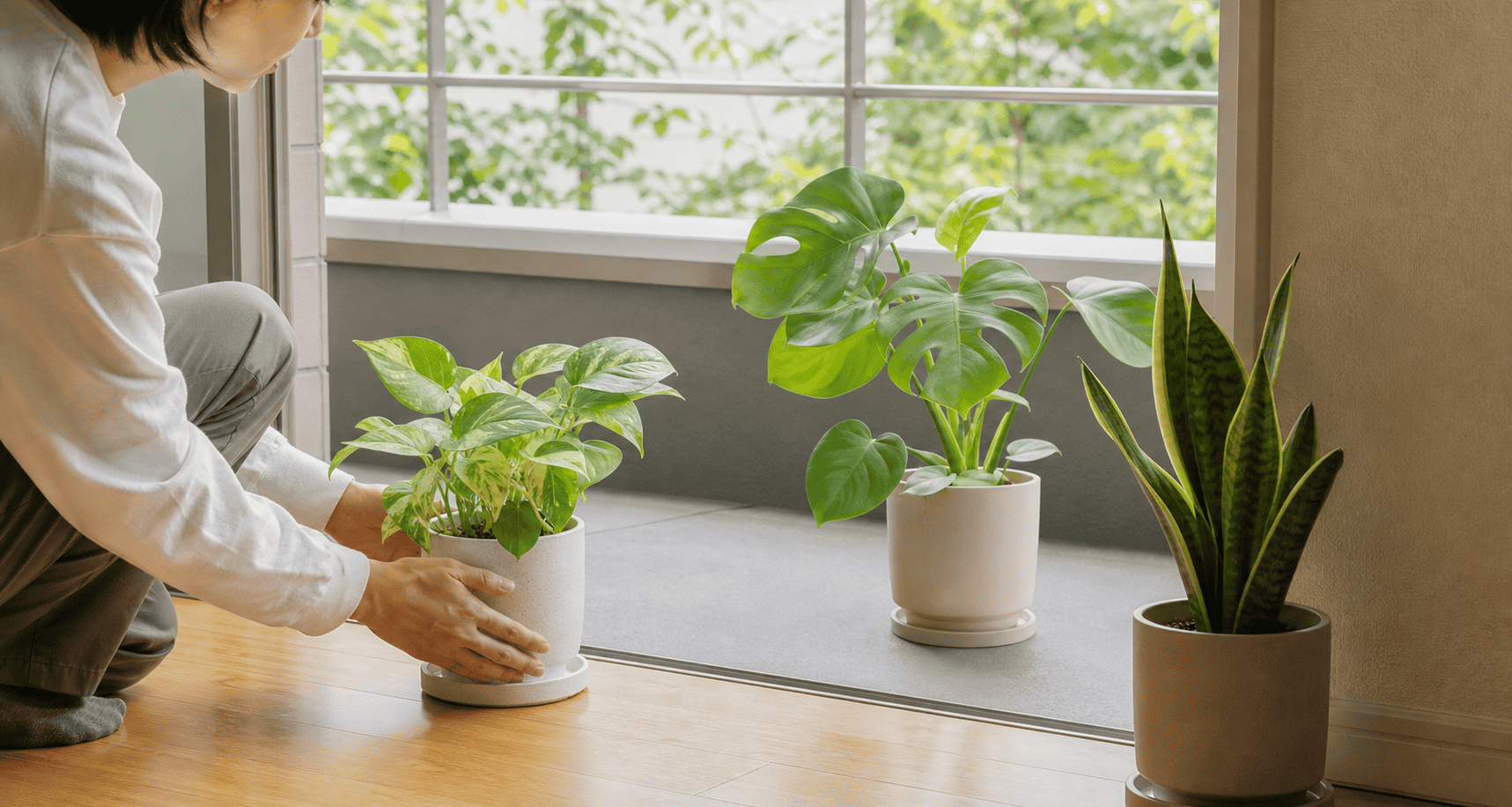
Puntos clave
- What to check before taking a houseplant onto a balcony
- Why indoor-grown plants struggle with sudden outdoor exposure
- How to acclimate a plant in bright shade instead of rushing the move
- What common mistakes come from sun, wind, rain, and overreaction
Respuesta rápida
Moving a houseplant outside is not automatically wrong, but it should be treated as a real environmental change rather than a harmless refresh. Sun, wind, rain, and reflected heat all become stronger variables the moment the plant leaves the room.
The safest approach is short bright-shade exposure, gradual acclimation, and careful observation of leaf response and drying speed. When you change conditions slowly instead of dramatically, a balcony can become useful without turning into a setback.
Tabla de contenidos
- Check sun, wind, and rain before you move anything
- Why indoor houseplants react badly to sudden outdoor exposure
- How to acclimate a plant more safely
- The mistakes beginners make most often
- How watering and placement should change
- Preguntas frecuentes
- Conclusión
Many people feel tempted to move houseplants outside once the weather turns warm and the balcony seems brighter and fresher than the room. The idea sounds healthy, but the transition often surprises beginners because a plant that looked stable indoors can wilt or scorch very quickly outside.
The key issue is not simply whether outdoor air is good or bad. It is how much stronger the light, airflow, and temperature swing become all at once. This guide explains when a balcony move can help, when it becomes risky, and how to acclimate a plant without pushing it too hard.
Check sun, wind, and rain before you move anything
The first balcony question is not whether the space feels pleasant to you. It is whether direct sun, steady wind, or rain exposure will hit the plant harder than its indoor routine ever did. Even a balcony that looks only mildly bright can be dramatically stronger than a windowsill inside.
Bright shade, soft morning conditions, and some protection from rain are the easiest starting point. A spot that bakes in reflected heat, catches strong afternoon sun, or stays wet after showers is much harder to use safely.
Why indoor houseplants react badly to sudden outdoor exposure
Plants raised indoors are adjusted to lower light and gentler airflow. When they are moved outside suddenly, leaves heat up faster, moisture is lost more quickly, and the pot may dry or overheat in ways the root system has not been handling before.
This is why wilting outside does not always mean the plant simply needs more water. It can also be a sign that the environment changed too sharply for the plant to process comfortably.
How to acclimate a plant more safely
A safer method is to begin with one or two hours in bright shade on a mild or cloudy day, then bring the plant back inside and watch the leaf response. If the leaves stay calm and the pot does not swing into extreme drying, you can gradually extend the outdoor time over several days.
This slow approach matters even for tougher plants. A species that can eventually tolerate stronger conditions may still react poorly if an indoor-grown specimen is pushed into them too fast.
The mistakes beginners make most often
The most common mistake is treating outdoor placement like an immediate upgrade and leaving the plant out for half a day from the start. Direct sun, hard wind, trapped rainwater in saucers, and hot concrete all create problems that do not exist in the same way indoors.
Another common mistake is overcorrecting after the first wilt. If the leaves droop at noon, many beginners add water immediately when the real problem may be heat or exposure rather than a truly dry root ball.
How watering and placement should change
Outdoor time can speed up drying, but that does not mean you should automatically raise watering frequency without checking the pot. Morning pot weight, leaf temperature, and whether the mix is drying clearly are more useful than reacting to appearance alone.
If a plant suddenly dries much faster than expected, the answer may be to soften the balcony conditions rather than to keep pouring in more water. Safer outdoor care usually comes from gentler placement first and watering adjustments second.
Preguntas frecuentes
Can I leave my houseplants on the balcony all the time?
Only sometimes, and it depends on both the plant and the balcony conditions. Most indoor-grown houseplants handle the transition more safely when they start with short bright-shade exposure instead of permanent outdoor placement.
Does wilting outside always mean the plant needs water?
No. Sudden light, wind, and heat can also make leaves droop temporarily, so check the pot and the leaf temperature before reacting with extra water.
Is rain exposure safe for houseplants outdoors?
Not by default. Repeated rain can keep the mix too wet, especially when saucers or covers trap runoff, so sheltered placement is usually safer.
Conclusión
Moving a houseplant outside is not automatically wrong, but it should be treated as a real environmental change rather than a harmless refresh. Sun, wind, rain, and reflected heat all become stronger variables the moment the plant leaves the room.
The safest approach is short bright-shade exposure, gradual acclimation, and careful observation of leaf response and drying speed. When you change conditions slowly instead of dramatically, a balcony can become useful without turning into a setback.