Tema de búsqueda: black spots houseplant leaves guide
Why Are There Black Spots on My Houseplant Leaves? How to Read Disease, Wet Leaves, Chilling, and Overwatering Stress
A practical English guide to black spots on houseplant leaves, including how to separate spreading disease-like lesions from wet-leaf damage, chilling, harsh light, and root stress from overly wet soil.
Puntos clave
- What black spots on indoor plant leaves usually point to first
- How to separate spreading lesions from one-time surface damage
- Why overwatering, wet leaves, chilling, and harsh light can all look similar
- What order of checks helps beginners respond without making the problem worse
Respuesta rápida
Black spots on houseplant leaves are not a single diagnosis. Spreading lesions, overly wet roots, wet leaves, chilling, and strong light can all create dark marks that look more alike than beginners expect.
If you read the pattern, check the pot, and then review recent room conditions, you can usually narrow the cause with much less guesswork and respond before the problem spreads further.
Tabla de contenidos
- What to check first when black spots appear
- How to tell a spreading lesion from temporary damage
- When wet soil and root stress are the real issue
- How wet leaves, chilling, and harsh light create similar marks
- The safest order of response
- Preguntas frecuentes
- Conclusión
Black spots on houseplant leaves can feel alarming because many growers immediately assume disease. Sometimes that concern is valid, but in indoor setups similar dark marks can also come from wet leaves left too long, cold stress, overly wet roots, or sudden strong light.
This guide explains how to read the pattern first so you can decide whether the issue is spreading, whether it is tied to the pot or the room, and what simple corrections are worth trying before you jump into heavier action.
What to check first when black spots appear
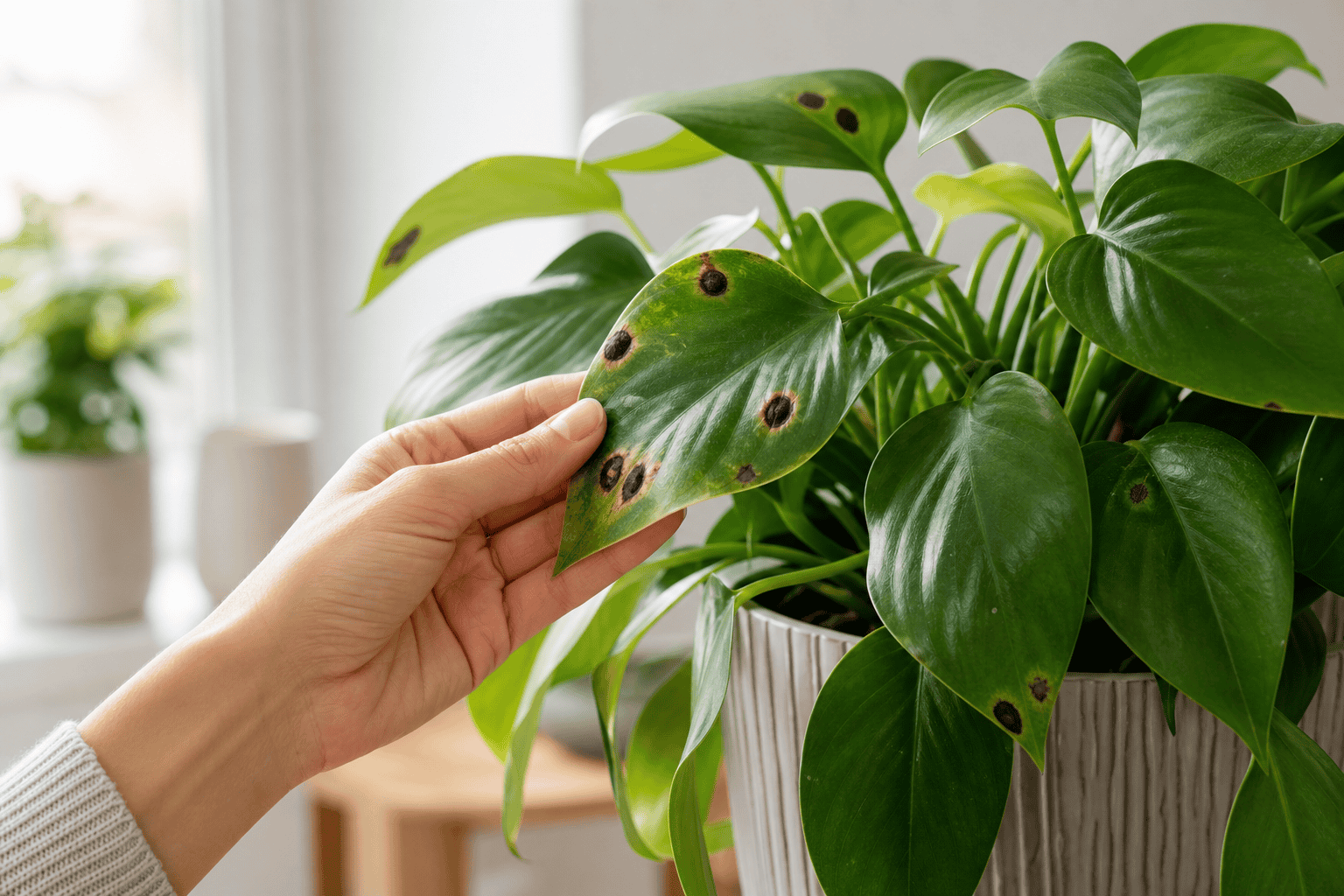
Start by asking whether the marks are limited to one older leaf or whether several leaves are developing similar dark spots. A single damaged leaf can point to physical injury or a short-lived stress event, while repeated spots across multiple leaves suggest a broader care mismatch or a lesion that may keep spreading.
The edge quality matters too. Clear round spots that enlarge over time deserve more caution, while diffuse blackening often fits cold, wet, or stress-related damage better than an actively spreading disease pattern.
How to tell a spreading lesion from temporary damage
Dark spots that slowly multiply, grow larger, or develop yellow halos are harder to dismiss as cosmetic damage. If similar marks show up on different leaves in the same general pattern, the problem is probably more than a simple scrape or old bruise.
By contrast, damage from bumping a leaf, sudden light exposure, or transport stress often stays in one place. It may look ugly, but it usually does not keep marching across the plant once the environment stabilizes.
When wet soil and root stress are the real issue
Indoor plants sometimes develop dark leaf spotting because the root zone has stayed wet too long. A heavy pot, trapped runoff, or a recently upsized container can leave the roots struggling, and the leaves may show blackened or collapsing areas even though the grower feels tempted to water again.
If the plant also looks dull, slow, or slightly yellow around the spots, review the drying rhythm before assuming the problem lives only on the leaf surface.
How wet leaves, chilling, and harsh light create similar marks
Leaves that stay wet into a cool night can darken in scattered patches that look more serious than they first are. The same thing can happen when a leaf sits too close to cold window glass or when droplets and strong light combine on a tender surface.
These cases often show a location pattern. The window side, the recently misted leaves, or the coldest part of the room may be affected more than the rest of the plant.
The safest order of response
Take a photo, watch whether the spots expand, and then review the pot condition before making a big change. If the soil is staying wet, fix that first. If the issue lines up with cold glass, leaf wetness, or sudden bright exposure, adjust the environment and watch the next new growth.
Older damaged tissue may never turn green again, so the best sign of progress is usually that the spots stop spreading and newer leaves emerge clean.
Preguntas frecuentes
Should I cut off every leaf with black spots right away?
Not always. If the spots are small and stable, it is often better to identify the cause first. Cut sooner when the spotting is spreading or affecting multiple leaves.
Can overwatering cause black spots on leaves?
Yes. Roots stressed by soil that stays wet too long can lead to dark damage on the leaves, although cold stress and wet-leaf damage can look similar.
Can water droplets leave dark marks on leaves?
They can, especially when moisture lingers in cool conditions or combines with stronger light on sensitive leaves.
Conclusión
Black spots on houseplant leaves are not a single diagnosis. Spreading lesions, overly wet roots, wet leaves, chilling, and strong light can all create dark marks that look more alike than beginners expect.
If you read the pattern, check the pot, and then review recent room conditions, you can usually narrow the cause with much less guesswork and respond before the problem spreads further.