Search topic: holes in houseplant leaves guide
Why Are There Holes in My Houseplant Leaves? How to Separate Chewing Damage, Tearing, and Friction Scars
A practical English guide to holes in houseplant leaves, including how to tell chewing damage apart from unfurling tears, friction damage, and older wounds that later open into visible holes.
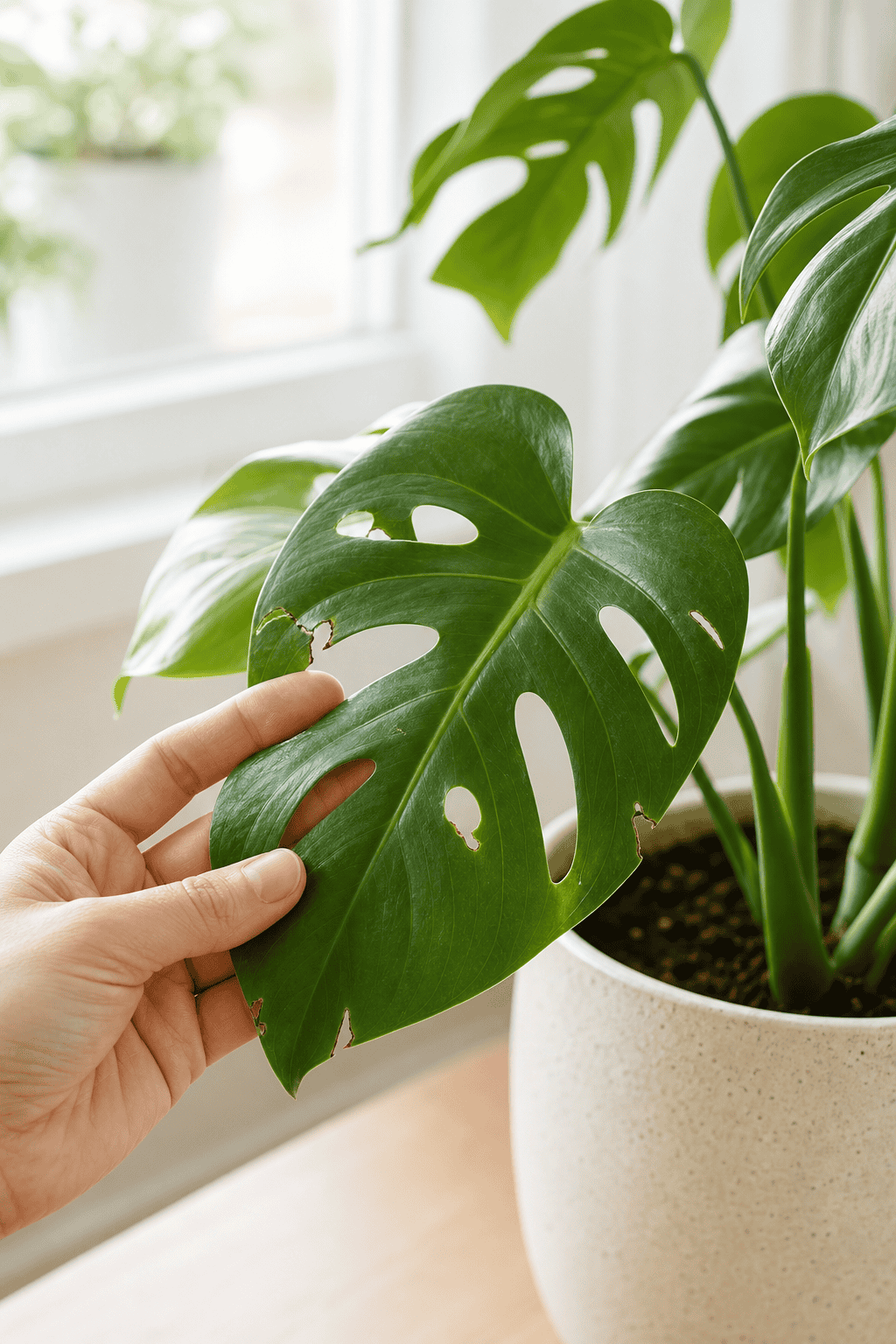
Key Points
- How to tell chewing damage from tearing or old scars
- Why new leaves sometimes rip while unfurling indoors
- What clues on leaf undersides, pot surfaces, and placement help narrow the cause
- What order of checks helps beginners avoid overreacting
Quick Answer
Holes in houseplant leaves are not always a pest verdict. Chewing damage, unfurling tears, friction scars, and old wounds can all leave similar openings once the leaf hardens.
If you read the pattern first and then check the underside, the room, and the plant's recent handling, you can usually narrow the cause without a lot of guesswork.
Table of Contents
- What to check first when holes appear
- How chewing damage differs from tearing
- Why new leaves can rip while unfurling indoors
- When indoor pests are still possible
- The safest order of response
- FAQ
- Conclusion
Holes in houseplant leaves often make beginners assume pests right away. Sometimes that is true, but indoor plants also develop holes when a new leaf tears while opening, when an older bruise dries and falls out, or when leaves keep rubbing against nearby surfaces.
This guide explains how to read the shape, pattern, and spread of the damage first so you can separate active chewing from one-time physical injury and make a calmer first response.
What to check first when holes appear
Start by asking whether the holes are limited to one older leaf or whether similar damage is showing up across newer leaves too. A single leaf can reflect an old injury, but repeated fresh holes suggest an active cause that is still happening.
The edge shape matters. Smooth rounded gaps point more toward chewing or tissue that later dropped out, while long splits along the leaf direction fit tearing, friction, or unfurling stress better.
How chewing damage differs from tearing
Chewing damage often looks rounded, uneven, or lightly scooped out, and the nearby leaf surface may show tiny dark specks, residue, or matching notches. If the number of holes keeps increasing, active feeding becomes more likely.
Tears usually follow a line. They may begin at the edge or along a fold in a tender new leaf and then dry into a hole-like gap. These marks often stop changing once the leaf has fully opened and hardened.
Why new leaves can rip while unfurling indoors
Soft new leaves are vulnerable when the room is dry, direct airflow hits the plant, or neighboring leaves stick together during the opening stage. In these cases the plant may look generally healthy while only the fresh leaf tears or opens with a split section.
This is especially common in plants with rolled new growth. The right response is usually environmental adjustment, not heavy treatment.
When indoor pests are still possible
Indoor setups are not immune to chewing pests. A plant brought in from outside, recently purchased stock, or insects entering around windows can still create holes. Looking at the leaf underside, pot surface, and even checking after dark can reveal what daytime inspections miss.
At the same time, repeated contact with walls, shelves, curtains, or your own handling can create damage that looks alarming but does not keep spreading once the contact stops.
The safest order of response
Take a photo, watch whether the holes multiply, inspect the underside of nearby leaves, and then review whether the plant is rubbing or unfurling in dry moving air. That sequence keeps you from jumping into unnecessary chemicals or repotting.
The best sign of success is usually clean new growth. Old holes rarely disappear, so focus on whether the next leaves emerge intact.
FAQ
Should I cut off every leaf with holes right away?
Not necessarily. If the damage is stable and the leaf is still useful, you can often leave it and focus on whether new holes continue to appear.
Is a torn new leaf always a pest problem?
No. Dry air, direct airflow, and leaves sticking during unfurling can all create tears that later look like holes.
Can indoor plants really get chewing damage?
Yes. It is less common than outdoors, but insects can still arrive with new plants, open windows, or temporary outdoor moves.
Conclusion
Holes in houseplant leaves are not always a pest verdict. Chewing damage, unfurling tears, friction scars, and old wounds can all leave similar openings once the leaf hardens.
If you read the pattern first and then check the underside, the room, and the plant's recent handling, you can usually narrow the cause without a lot of guesswork.