Search topic: yellow leaves houseplant causes
Why Are My Houseplant Leaves Turning Yellow?
An English troubleshooting guide to yellow leaves, focused on the most common indoor causes and the first checks that narrow them down.
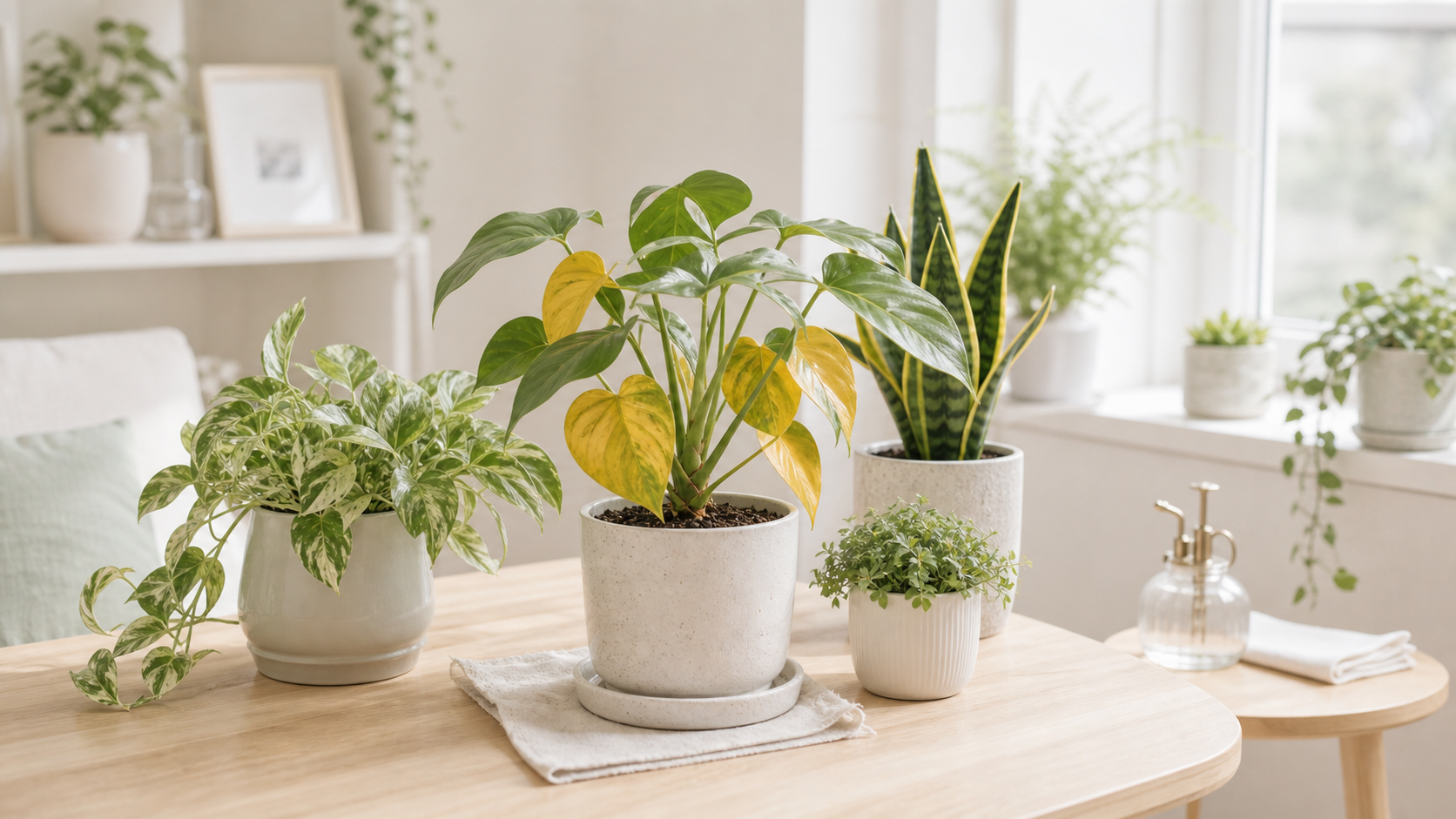
Key Points
- Why yellowing is a symptom rather than a single diagnosis
- How to sort normal aging from a real problem
- What to check first in the pot and the room
- How to stop the pattern from spreading
Quick Answer
Yellow leaves are a useful warning, but only when you read them as part of a pattern. The pot, the room, and the plant's overall behavior matter together.
Once you understand which pattern you are seeing, the correction usually becomes much clearer.
Table of Contents
- When yellow leaves are normal
- What the pot can tell you
- What the room can tell you
- How to respond without making it worse
- FAQ
- Conclusion
Yellow leaves are one of the most common reasons people feel lost with houseplants because the symptom appears in so many different situations. Color change alone does not tell you enough.
This guide helps you look at the pattern behind yellowing so you can make a smarter first correction.
When yellow leaves are normal
An older leaf fading occasionally can be part of normal turnover, especially when the rest of the plant is stable. A whole wave of yellowing is a different story.
Pattern matters: one old leaf is not the same as many leaves changing together.
What the pot can tell you
Wet slow soil points toward overwatering or root stress, while a very dry fast cycle may point toward dehydration or environmental stress. The pot usually offers more context than the leaf color alone.
Smell, weight, and drying speed all help narrow the cause.
What the room can tell you
Light shifts, cold drafts, hot airflow, and recent moves can all trigger yellowing patterns. Sudden change in placement is often relevant if the symptom appeared soon after.
Always review the room before assuming the problem lives only in the soil.
How to respond without making it worse
Do not cut water drastically or flood the pot without evidence. Start with the simplest likely cause and watch whether new leaves remain stable.
Yellowing is easier to stop when you solve the underlying mismatch early.
FAQ
Does one yellow leaf mean the plant is dying?
Not usually. A single older leaf can be normal if the rest of the plant looks stable.
Is yellowing always caused by overwatering?
No. Light, drafts, dryness, and natural aging can also be involved.
What should I check first?
Start with the soil condition and the recent room changes before making big care changes.
Conclusion
Yellow leaves are a useful warning, but only when you read them as part of a pattern. The pot, the room, and the plant's overall behavior matter together.
Once you understand which pattern you are seeing, the correction usually becomes much clearer.