Search topic: summer houseplant care
Summer Houseplant Care
An English seasonal guide to keeping indoor plants stable during hot weather, stronger light, faster drying, and summer travel routines.
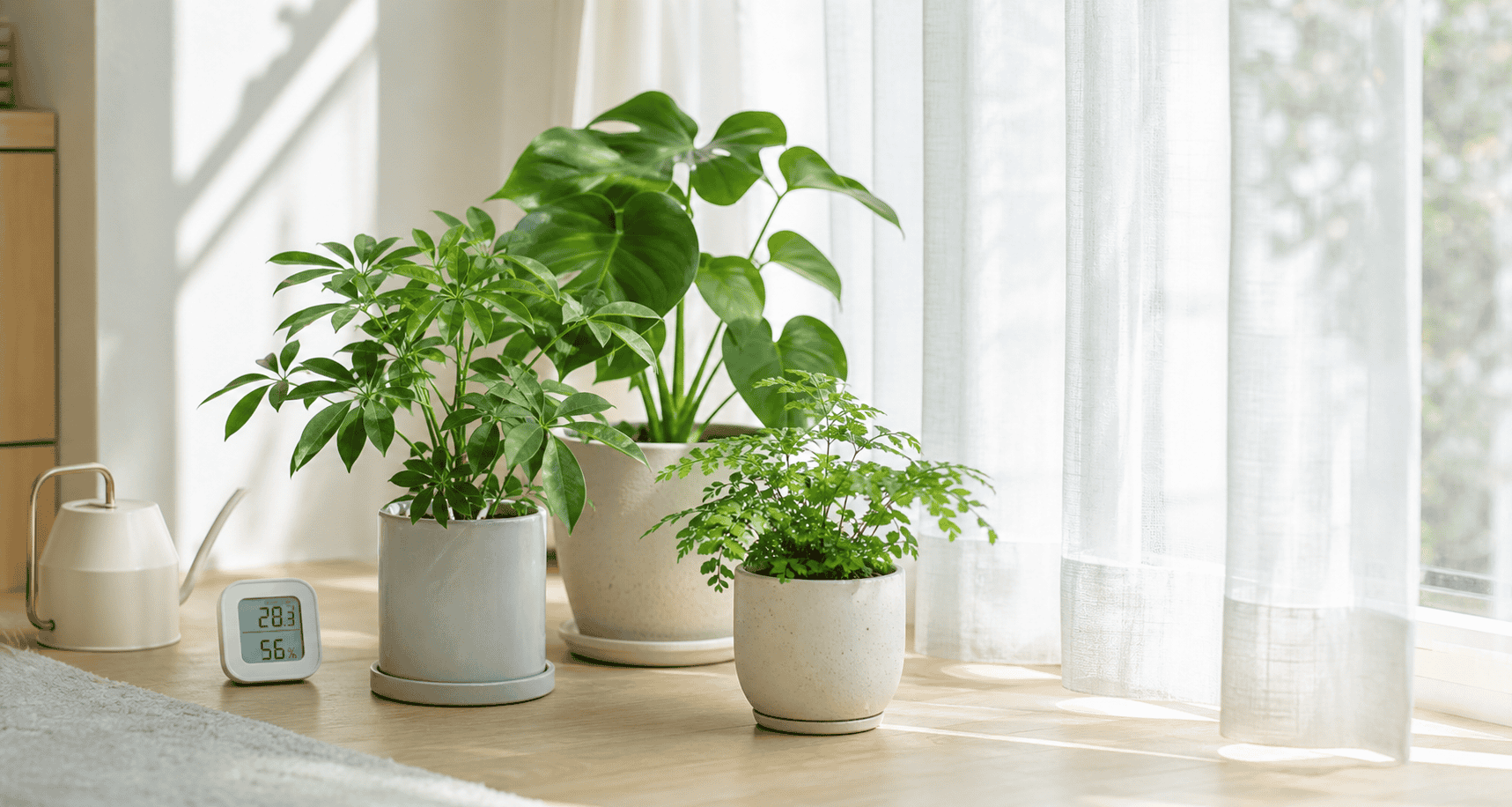
Key Points
- What changes indoors when summer arrives
- How to manage heat, stronger light, and faster drying
- Why airflow and travel planning matter more in summer
- What mistakes cause avoidable stress
Quick Answer
Summer care works best when you respond to stronger light and faster drying without abandoning observation.
If the plant stays in stable light, avoids harsh heat stress, and dries in a readable rhythm, summer becomes a productive season rather than a risky one.
Table of Contents
- What summer changes first
- Watering, heat, and light balance
- Airflow and summer travel
- Easy mistakes to avoid
- FAQ
- Conclusion
Summer can be a strong growing season, but it also raises the pace of care. Brighter windows, hotter rooms, and faster drying make old routines less reliable.
This guide helps you shift into summer without swinging too far into panic watering or harsh placement changes.
What summer changes first
The room often becomes brighter and drier even before the plant visibly speeds up. Pots may lose moisture faster, and plants near windows can receive more intensity than they handled in spring.
A summer routine starts with noticing these environmental changes early.
Watering, heat, and light balance
Some plants need slightly more frequent watering in summer, but only when the pot really supports it. Heat without enough light can still cause confusing stress if the room is bright to you but not ideal for the plant.
Watch the drying rhythm and the plant's leaf posture together.
Airflow and summer travel
Hot stagnant corners can become stressful quickly, especially when windows stay closed and the room heats up. Summer is also when travel plans begin to matter more for watering strategy.
Use gentle airflow and think ahead before long absences rather than reacting at the last minute.
Easy mistakes to avoid
Do not assume every dry-looking plant simply needs more water. Summer problems can also come from hot glass, vent paths, or leaves that are overheating.
The best summer care is active but measured, not frantic.
FAQ
Should all plants be watered more often in summer?
Not all. Many do dry faster, but the correct change depends on the actual room and pot behavior.
Is a very bright window always helpful in summer?
Not necessarily. Some windows become intense enough to overheat or scorch softer plants.
What is the hardest part of summer care?
Keeping up with faster environmental shifts without reacting too aggressively.
Conclusion
Summer care works best when you respond to stronger light and faster drying without abandoning observation.
If the plant stays in stable light, avoids harsh heat stress, and dries in a readable rhythm, summer becomes a productive season rather than a risky one.