Search topic: rootbound houseplant signs
Signs Your Houseplant Is Rootbound and When to Repot
A practical English guide to spotting rootbound houseplants, separating the signs from root rot or simple thirst, and deciding when repotting can safely wait.
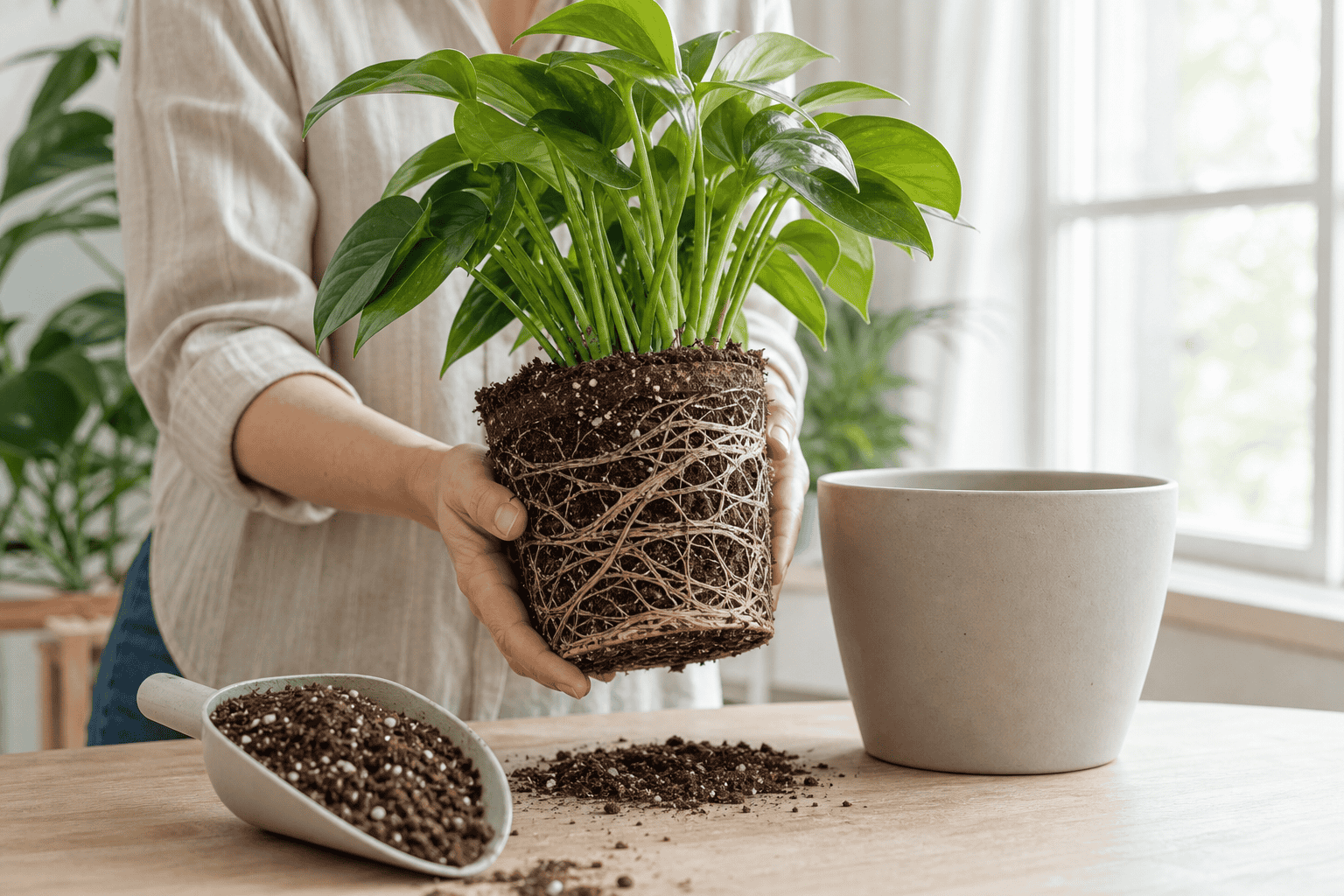
Key Points
- How to tell crowded roots from normal healthy growth
- The signs that repotting is actually becoming necessary
- How to separate rootbound stress from root rot or simple thirst
- When it is smarter to wait for a better repotting window
Quick Answer
The best rootbound diagnosis comes from patterns, not a single root peeking out. Drying speed, growth quality, and watering response usually tell the story more clearly.
If several signs are stacking up, repotting is probably worth planning. If the plant is still manageable and the season is poor, waiting can be the more skillful choice.
Table of Contents
- Why rootbound does not just mean lots of roots
- The clearest signs that repotting is worth considering
- How to separate it from root rot or simple underwatering
- When repotting can safely wait
- A practical way to make the final decision
- FAQ
- Conclusion
A few roots showing at the bottom of a pot do not always mean a houseplant needs immediate repotting. What matters more is whether the pot has become hard to manage and the plant is starting to lose momentum.
This guide explains how to spot the more reliable rootbound signs, what can look similar, and how to decide whether repotting should happen now or later.
Why rootbound does not just mean lots of roots
A vigorous plant naturally fills its pot over time. The problem begins when roots take up so much space that the mix can no longer hold moisture well or support steady growth.
In practice, a rootbound plant often becomes difficult to water, dries much faster than before, and starts losing the buffer that soil normally provides.
The clearest signs that repotting is worth considering
Fast drying is one of the easiest clues. If the pot used to stay workable for several days and now feels light almost immediately, the root-to-soil balance may be too tight.
Other strong signs include new leaves getting smaller, growth slowing without another clear cause, and the plant perking up after watering only to look thirsty again very soon.
How to separate it from root rot or simple underwatering
Rootbound stress usually points toward a pot that dries too fast. Root rot points in the opposite direction: a heavy, slow, sour-smelling pot and a plant that does not recover even after the soil should have helped.
Simple underwatering can also cause drooping, but it usually resolves more cleanly once the pot is watered and does not always come with shrinking leaves or stalled growth.
When repotting can safely wait
Even a crowded root ball does not always need urgent action. If the plant is still stable, the season is harsh, or the plant is adjusting to a new room, waiting can be the better choice.
Repotting is easier on the plant when growth conditions are supportive, so timing still matters even when the need itself is real.
A practical way to make the final decision
Ask whether the current pot has become inconvenient in daily care: water running off the sides, a dramatic drying cycle, or a top-heavy plant that no longer feels secure. If several of those are happening together, repotting becomes easier to justify.
When you do move up, a one-step pot increase is usually safer than a dramatic jump, because oversizing can create a new overwatering problem.
FAQ
Should I repot as soon as I see roots at the drainage hole?
Not automatically. It is safer to check whether other signs are also present, such as unusually fast drying, smaller leaves, or a plant that wilts again very quickly after watering.
Do healthy houseplants need yearly repotting?
Not always. Growth rate, pot size, and soil condition all change the schedule, so yearly repotting is not a universal rule.
What if I notice rootbound signs in extreme summer or winter?
If the situation is not urgent, stabilizing care and waiting for a better window is often safer. Act sooner only when the current pot has become genuinely unmanageable.
Conclusion
The best rootbound diagnosis comes from patterns, not a single root peeking out. Drying speed, growth quality, and watering response usually tell the story more clearly.
If several signs are stacking up, repotting is probably worth planning. If the plant is still manageable and the season is poor, waiting can be the more skillful choice.