Search topic: root rot houseplants
How to Spot and Treat Root Rot in Houseplants
An English troubleshooting guide to recognizing root rot early, judging recovery chances, and resetting the plant without causing new damage.
Key Points
- The earliest signs root rot often gives indoors
- How to tell wet soil from true root decline
- When a rescue is realistic
- What to change after treatment so it does not return
Quick Answer
Root rot is serious, but not always a lost cause. The sooner you identify the pattern of wet soil, weak growth, and failing roots, the better the recovery odds.
Treat the plant and the setup together. Otherwise the same conditions often recreate the problem.
Table of Contents
- What root rot usually looks like
- When to inspect the roots
- What recovery depends on
- Preventing a repeat
- FAQ
- Conclusion
Root rot is one of the most common indoor plant problems because it begins underground, where the warning signs are easy to miss. By the time leaves react, people often feel behind.
This guide helps you diagnose calmly, judge whether the plant can recover, and make changes that protect the next growth cycle.
What root rot usually looks like
The plant may wilt even though the soil is wet, leaves may yellow without a clear dry period, and the mix may smell stale or sour. Growth often stalls as well.
These clues matter more when they appear together than when only one symptom shows up briefly.
When to inspect the roots
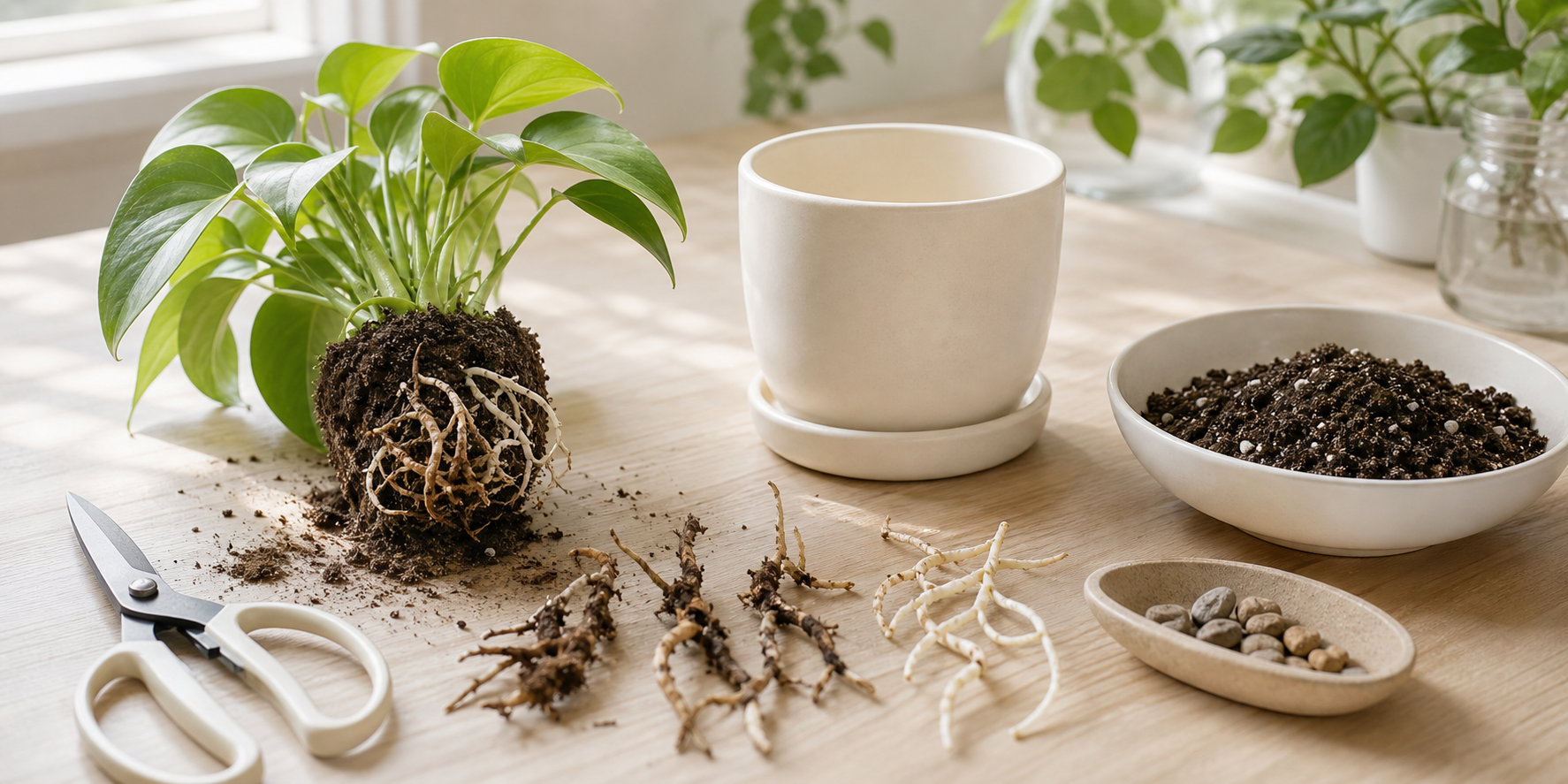
If the pot stays wet far beyond the normal rhythm or the plant keeps declining despite reduced watering, a root check is often worth it. Healthy roots should feel firm, not mushy or collapsing.
Inspection is most useful when it leads to a full correction of the setup, not just a cosmetic cleanup.
What recovery depends on
Recovery is more realistic when part of the root system is still healthy and the stem remains solid. If all the roots are compromised, the path forward becomes much harder.
A fresh, better-draining setup only helps when the plant still has enough living structure to use it.
Preventing a repeat
Avoid oversized pots, dense stale mixes, and watering by habit alone. Room light and airflow also affect how safe your watering schedule really is.
Root rot prevention is mostly about making the pot dry in a clear, readable rhythm.
FAQ
Can a plant recover from root rot?
Sometimes yes, if part of the root system and stem remain healthy.
Is yellowing always root rot?
No. Yellow leaves can come from many causes, which is why soil behavior and root condition matter.
What is the most common cause?
A wet root zone that stays wet too long, often because of oversize pots, dense mix, or weak light.
Conclusion
Root rot is serious, but not always a lost cause. The sooner you identify the pattern of wet soil, weak growth, and failing roots, the better the recovery odds.
Treat the plant and the setup together. Otherwise the same conditions often recreate the problem.