Search topic: rainy season houseplant care
Rainy Season Houseplant Care
An English seasonal guide to managing indoor plants during humid rainy periods, with focus on mold, rot, and stale air.
Key Points
- Why rainy season care feels different indoors
- How humidity changes watering judgment
- Ways to keep air moving without stressing the plant
- How to avoid mold, rot, and pest spikes
Quick Answer
Rainy season care is mostly about respecting slower drying and weaker airflow. Plants often need less intervention, not more water.
If you keep the room breathable and avoid letting the root zone stay wet, most indoor plants handle the season well.
Table of Contents
- What changes during the rainy season
- How watering needs shift
- Airflow and placement
- Preventing rainy-season trouble
- FAQ
- Conclusion
Rainy season care can confuse even careful plant owners because the room feels warm while the pots dry much more slowly. The plant does not necessarily want the same routine you used in drier weeks.
This guide focuses on the environmental changes that matter most during humid stretches indoors.
What changes during the rainy season
Humidity rises, soil stays wet longer, and air circulation often gets weaker if windows remain closed. Those shifts make root and mold issues more likely even when the plant itself still looks calm.
The biggest mistake is acting as though nothing changed.
How watering needs shift
Because evaporation slows down, many plants need a longer gap between waterings. Surface dryness can also become less reliable as a sole indicator.
Checking pot weight and deeper moisture becomes more useful in humid spells.
Airflow and placement
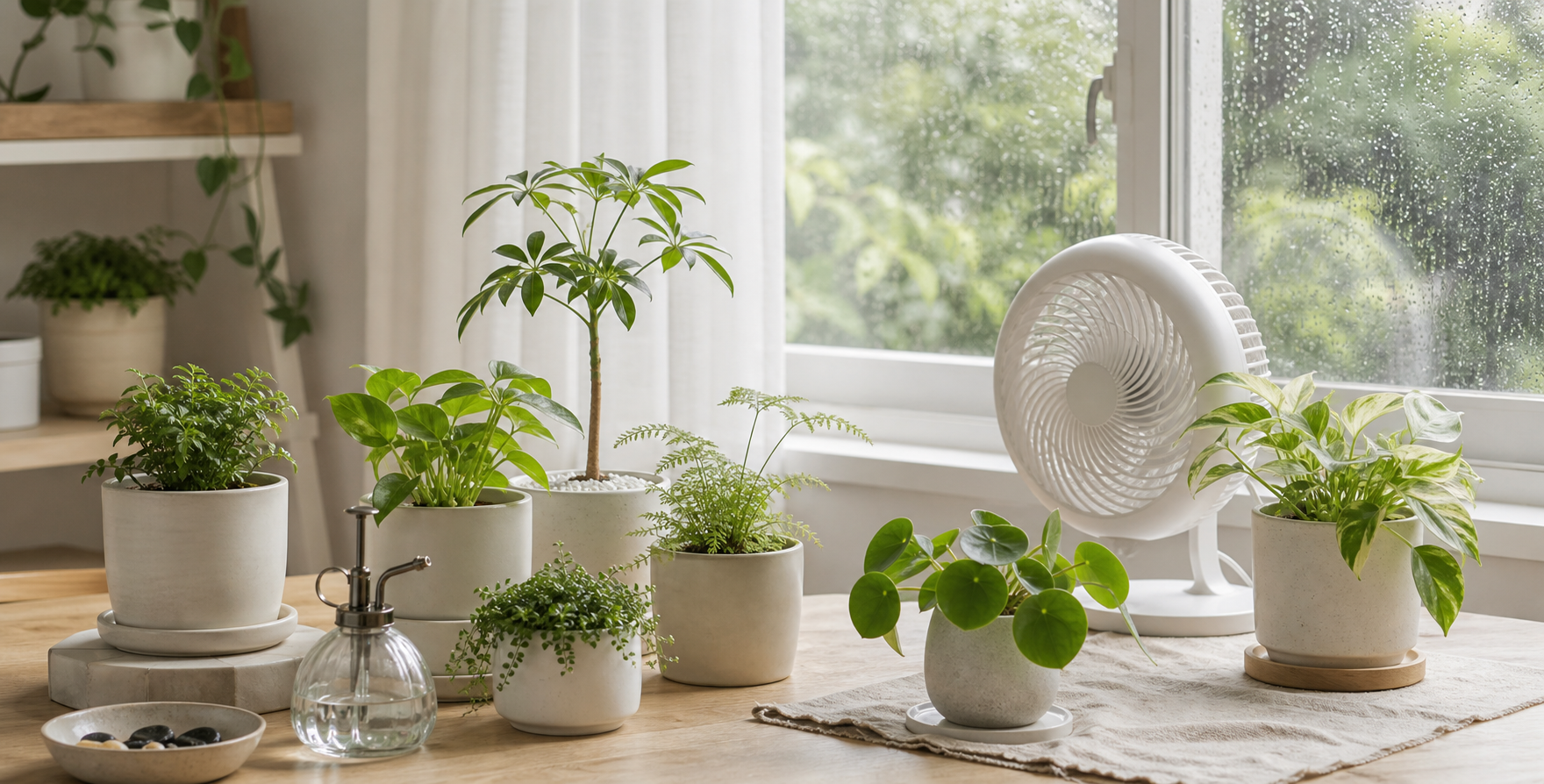
Gentle airflow becomes especially important during muggy weather. Plants packed too closely together or kept in stale corners often struggle first.
Use indirect circulation rather than harsh direct air, especially on softer foliage.
Preventing rainy-season trouble
Watch for mold on the soil surface, fungus gnats, and leaves that stay damp too long. Small preventive corrections usually work better than waiting for obvious decline.
A lighter hand with water and a little more attention to spacing can solve many rainy-season issues.
FAQ
Should I water more because the air feels warm?
Not automatically. Humidity often makes pots dry more slowly even when the room feels warm.
Do I need a fan during the rainy season?
Gentle room circulation can help a lot, especially if the air tends to stay still.
What trouble shows up first in humid weather?
Slow-drying soil, mold, and fungus gnats are all common early warnings.
Conclusion
Rainy season care is mostly about respecting slower drying and weaker airflow. Plants often need less intervention, not more water.
If you keep the room breathable and avoid letting the root zone stay wet, most indoor plants handle the season well.