Search topic: wrinkled houseplant leaves guide
Why Do My Houseplant Leaves Look Wrinkled? How to Separate Thirst, Root Stress, Dry Air, and Repotting Shock
A practical English guide to wrinkled houseplant leaves, including how to tell simple thirst apart from wet-root stress, dry airflow, strong light exposure, and temporary stress after repotting.
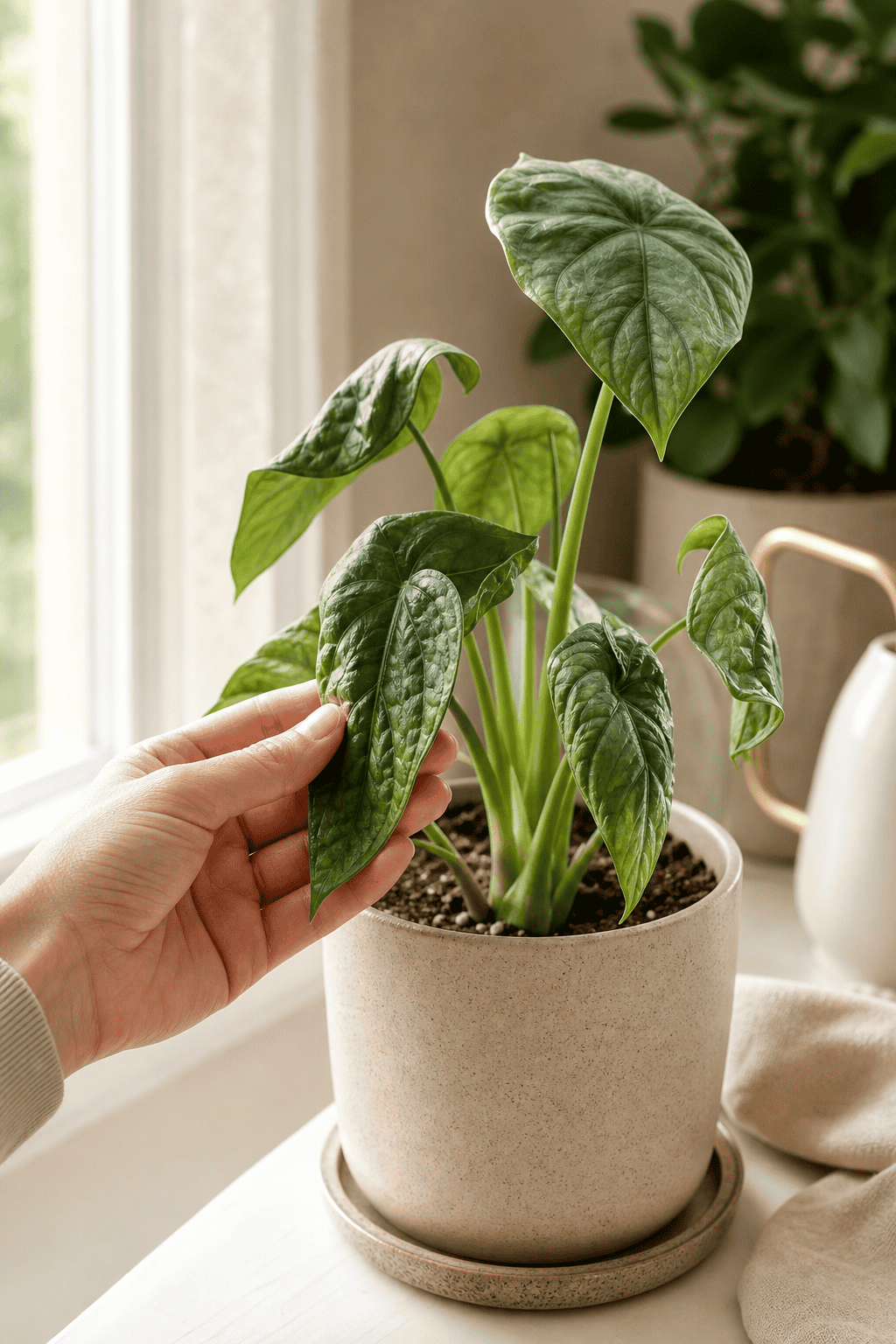
Key Points
- What to check first when indoor plant leaves look wrinkled or shrunken
- How true thirst differs from roots that cannot absorb well in wet soil
- Why dry airflow, strong light, and repotting stress can create a similar look
- What order of corrections helps beginners avoid making the problem worse
Quick Answer
Wrinkled houseplant leaves do not point to one single diagnosis. Thirst, wet-root stress, dry airflow, strong light, and repotting shock can all leave leaves looking shrunken or less firm.
If you read the pot first and then review the room and recent plant changes, you can usually narrow the cause without overcorrecting.
Table of Contents
- What to check first when leaves look wrinkled
- How thirst differs from root stress
- When dry airflow or strong light is the bigger issue
- Why repotting and sudden changes can trigger wrinkling
- The safest order of response
- FAQ
- Conclusion
Wrinkled leaves often make indoor growers assume the plant simply needs water right away. Sometimes that is true, but the same look can also appear when the roots are stressed in wet soil, when dry moving air strips moisture from the leaf surface, or when a recently repotted plant has not settled yet.
This guide explains how to read the pot, the leaf texture, and the recent room changes in a safer order so you can correct the real cause instead of reacting to the symptom alone.
What to check first when leaves look wrinkled
Start by checking whether the whole plant looks weak or whether the wrinkling is limited to a few leaves. Fine surface wrinkles, thinning leaves, and loss of firmness can all point in slightly different directions depending on the pot condition.
Next, lift the pot and check the deeper drying pattern. If the pot is very light and the root zone is truly dry, thirst is easier to suspect. If the pot is still heavy and cool, root trouble or environmental stress becomes more likely.
How thirst differs from root stress
Thirst-related wrinkling usually arrives with a lighter pot and leaves that feel thinner or softer overall. Once watered properly, the plant often regains some tension within a day.
Root stress is more confusing because the leaves can wrinkle even while water is still present in the pot. An oversized container, trapped runoff, or rough repotting can leave the roots unable to move water efficiently to the leaves.
When dry airflow or strong light is the bigger issue
Indoor plants can wrinkle when the leaf surface loses moisture faster than the roots can replace it. Air conditioner vents, fans, and harsh window intensity can all create that pattern, especially on the side of the plant facing the stress.
In these cases the soil may not be especially dry. The better first move is often reducing airflow or softening the light, not immediately adding more water.
Why repotting and sudden changes can trigger wrinkling
After repotting, moving, or bringing a plant home, the root system may need time to adjust. During that period the leaves can look slightly wrinkled or less firm even when the care routine seems reasonable.
This kind of stress often worsens when growers keep disturbing the plant, add fertilizer too soon, or keep changing the environment every day.
The safest order of response
Take a photo, confirm whether the pot is actually dry, and respond only to that evidence first. Water deeply if it is truly dry. If it is not, hold back water, reduce harsh airflow or light, and review recent changes before doing anything stronger.
The best sign of improvement is often not the oldest leaf fully recovering, but newer leaves staying fuller and more stable.
FAQ
Should I water immediately when leaves look wrinkled?
Only if the pot is truly dry. Wrinkling can also happen when roots are stressed in wet soil or when dry airflow is pulling moisture from the leaves.
Can wrinkled leaves become smooth again?
Mild stress can improve, but badly shrunken tissue may not fully recover. Cleaner new growth is usually the better sign to watch.
Is wrinkling after repotting always a failure?
No. It can be a temporary adjustment response, especially if the roots were disturbed or the plant moved into brighter, windier conditions at the same time.
Conclusion
Wrinkled houseplant leaves do not point to one single diagnosis. Thirst, wet-root stress, dry airflow, strong light, and repotting shock can all leave leaves looking shrunken or less firm.
If you read the pot first and then review the room and recent plant changes, you can usually narrow the cause without overcorrecting.