Search topic: houseplant tap water guide
Is Tap Water Safe for Houseplants? Chlorine, Letting It Sit, and Beginner-Friendly Rules
A practical English guide to using tap water for houseplants, including why most indoor plants handle it well, when letting water sit can help, and what problems beginners should check before blaming water quality.
Key Points
- Why most common houseplants can handle normal tap water
- Why water temperature and watering habits matter more than perfection
- When letting tap water sit is useful and when it is unnecessary
- Which indoor problems are more likely than water-quality damage
Quick Answer
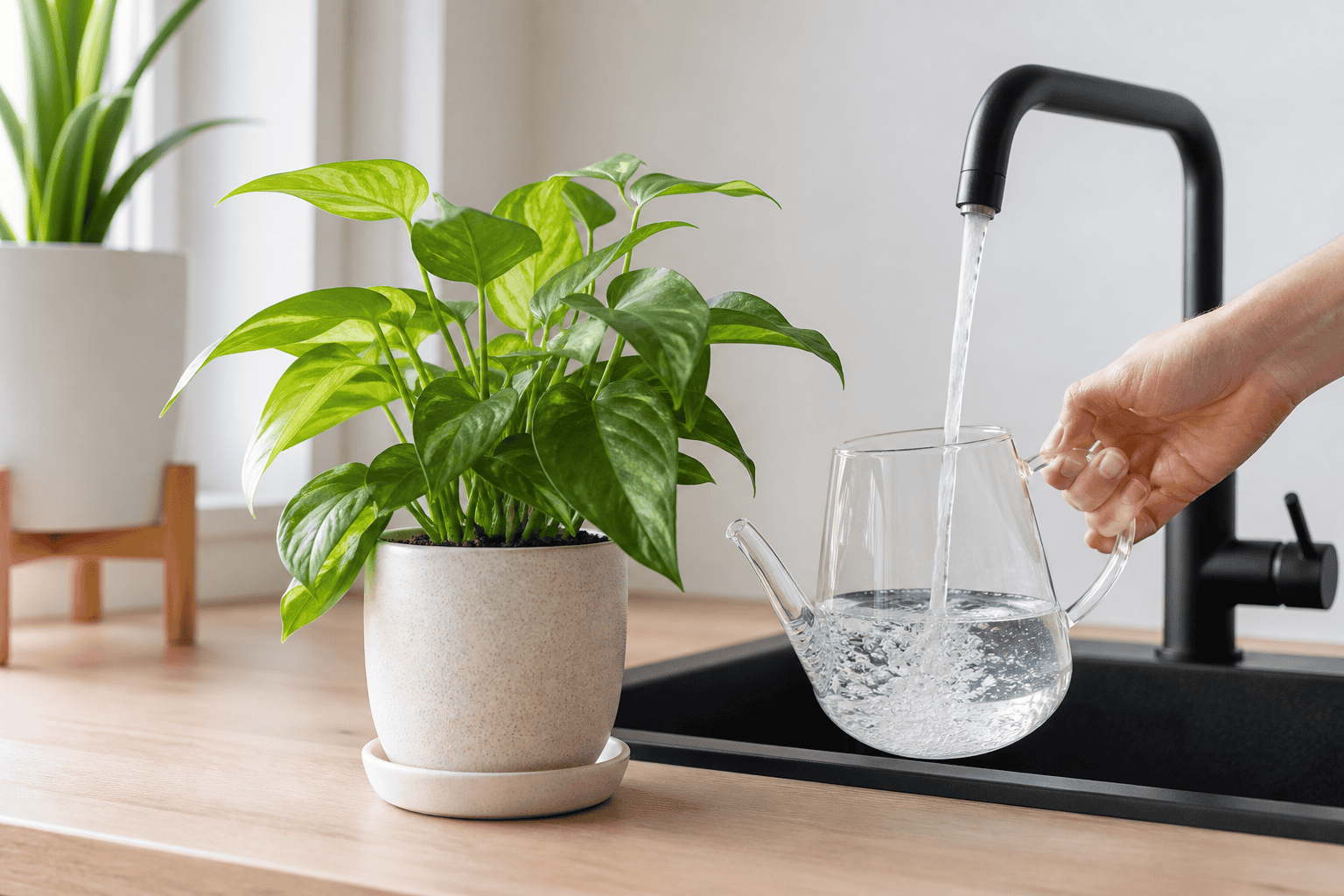
In most homes, tap water is a practical and safe default for houseplants. Watering timing, drainage, and room conditions usually matter much more than trying to create an ideal water source for every plant.
If you want to be slightly gentler, let very cold or strongly chlorinated water sit for a while. Beyond that, focus on how the water is used rather than worrying too much about where it came from.
Table of Contents
- Most houseplants can use ordinary tap water
- Why people worry about tap water in the first place
- When letting water sit can actually help
- A simple tap-water routine for beginners
- What to check before blaming water quality
- FAQ
- Conclusion
Many beginners hear that tap water is too harsh for houseplants because of chlorine or minerals, so they start wondering if every watering needs filtered water or a container left out overnight.
In most indoor homes, that level of worry is unnecessary. This guide explains why ordinary tap water is usually fine, when small adjustments can help, and what plant problems should be checked first before blaming the water itself.
Most houseplants can use ordinary tap water
For common indoor plants such as pothos, monstera, pachira, and sansevieria, tap water is usually good enough. In practice, they are affected far more by watering rhythm, drainage, and room conditions than by the fact that the water came from the kitchen faucet.
That does not mean water quality never matters, but it is rarely the first reason a beginner's plant struggles indoors.
Why people worry about tap water in the first place
The usual concerns are chlorine, dissolved minerals, and very cold water straight from the tap. White marks on leaves or pots can also make people assume the water must be harming the plant.
Those details are not always meaningless, but they still need context. A plant sitting in wet soil too long or drying out under strong airflow usually faces a bigger problem than trace chlorine.
When letting water sit can actually help
Letting water sit for a while can be useful when the chlorine smell feels unusually strong, when winter tap water is very cold, or when you want gentler water for leaf wiping or light misting. In those cases, bringing the water closer to room temperature makes it easier to use.
What beginners do not need is a rigid rule that every watering must involve overnight preparation. If the extra step makes watering inconsistent, it can cause more trouble than it prevents.
A simple tap-water routine for beginners
A safer routine is to confirm the pot has actually dried enough, water thoroughly, let the excess drain, and empty the saucer afterward. That sequence supports healthier roots far more reliably than switching to a special water source without fixing the routine.
If visible mineral marks bother you, wipe the leaves and keep the pot area clean instead of assuming the water is automatically unsafe.
What to check before blaming water quality
Brown tips, yellow leaves, and weak growth are often linked to dry airflow, low light, soggy soil, or root crowding first. Those causes are more common and more useful to correct than changing water type immediately.
Treat tap water as a fine default unless there is a specific reason to suspect it. Most indoor improvements come from better observation, not from chasing a perfect water source.
FAQ
Do I need to let tap water sit before every watering?
Not usually. Most indoor plants can handle normal tap water, though letting it sit can help when the water feels very cold or smells strongly chlorinated.
Is filtered water always better for houseplants?
Not automatically. Indoor watering habits, drainage, and room conditions are usually more important than upgrading the water source.
Are brown leaf tips always caused by tap water?
No. Dry airflow, soggy soil, root stress, or low light are often more likely causes indoors.
Conclusion
In most homes, tap water is a practical and safe default for houseplants. Watering timing, drainage, and room conditions usually matter much more than trying to create an ideal water source for every plant.
If you want to be slightly gentler, let very cold or strongly chlorinated water sit for a while. Beyond that, focus on how the water is used rather than worrying too much about where it came from.