Search topic: houseplant soil guide
How to Choose Soil for Houseplants
A beginner-friendly English guide to soil structure, drainage, indoor-friendly mixes, and matching the mix to different plant types.
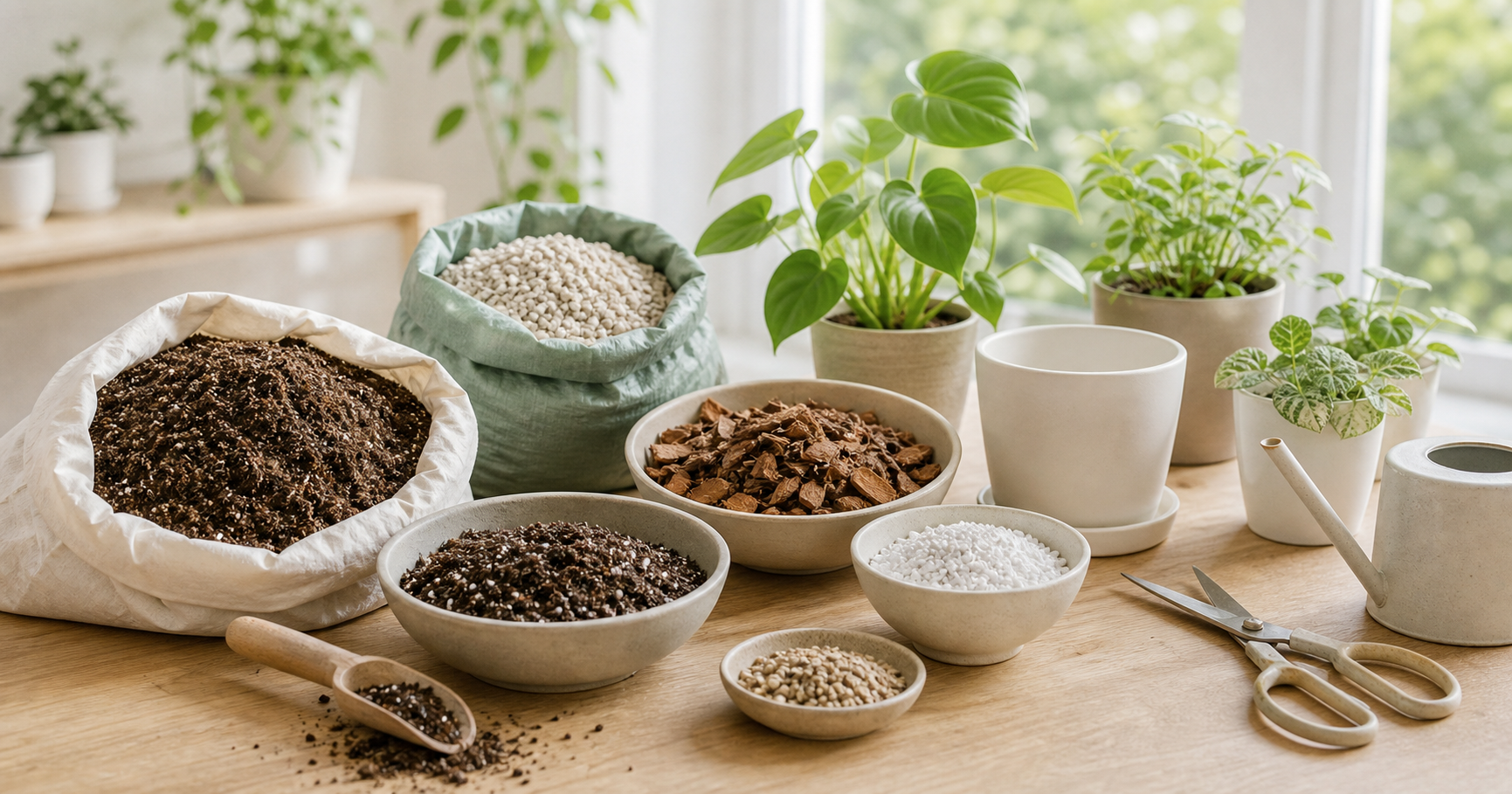
Key Points
- The three soil qualities beginners should check first
- How indoor conditions change soil choice
- When general houseplant mix is enough
- Why heavy wet soil causes more problems than cheap soil
Quick Answer
The best soil for indoor plants is the one that stays understandable in your room. It should drain, breathe, and still hold enough moisture to avoid daily panic.
When in doubt, start with a balanced houseplant mix and refine from observation instead of trying to solve everything on day one.
Table of Contents
- The three traits to check first
- Why indoor rooms change the answer
- When a general mix is enough
- Common soil mistakes to avoid
- FAQ
- Conclusion
Soil is one of the least exciting purchases in plant care, but it influences almost every later mistake. Watering becomes much easier when the mix behaves predictably.
This guide keeps the decision simple: choose a mix that suits the plant and your room, not just one that sounds premium.
The three traits to check first
Good indoor soil needs a balance of drainage, air flow, and manageable moisture retention. If one side is extreme, the routine becomes harder to read.
Beginners usually do best with a mix that gives clear wet-to-dry feedback rather than staying soggy for a long time.
Why indoor rooms change the answer
A mix that works outdoors may stay too wet inside because airflow and sunlight are weaker. Apartments with low light often need more attention to drainage than people expect.
That is why a standard houseplant mix is often a better starting point than improvised garden soil.
When a general mix is enough
For many common houseplants such as pothos, pachira, and peperomia, a good store-bought houseplant mix is perfectly adequate. You do not need to custom-blend every pot to be successful.
Adjust only when you see a consistent mismatch between the plant and the way the mix dries.
Common soil mistakes to avoid
A very moisture-retentive mix in a large pot is one of the easiest ways to invite root problems. Reusing old compacted soil can also reduce airflow around the roots.
It is usually safer to choose a cleaner, more readable mix than to chase richness or complexity.
FAQ
Do all houseplants need different soil?
Not all. Many common houseplants do well in a standard indoor mix, with only small adjustments when needed.
Is heavy, rich soil better for growth?
Not indoors. A mix that stays too wet often causes more trouble than it solves.
Should I reuse old soil after repotting?
You can sometimes reuse part of it, but compacted or degraded mix is usually better replaced.
Conclusion
The best soil for indoor plants is the one that stays understandable in your room. It should drain, breathe, and still hold enough moisture to avoid daily panic.
When in doubt, start with a balanced houseplant mix and refine from observation instead of trying to solve everything on day one.