Search topic: houseplant saucer water guide
Should You Leave Water in a Houseplant Saucer? Safer Drainage Habits for Beginners
A practical English guide to whether houseplants should sit in water after watering, why saucers and cachepots can create root trouble indoors, and how beginners can drain excess water more safely.
Key Points
- Why leaving water in a saucer often causes more trouble than beginners expect
- How standing water changes drying speed around the roots
- When to drain saucers and cachepots after watering
- Why bottom watering is not the same as leaving water behind all day
Quick Answer
For most indoor houseplants, leaving water in the saucer is riskier than it is helpful. Emptying the excess usually makes root conditions clearer and reduces the chance of chronic over-wetness.
The goal is not to water timidly, but to water fully and then remove what the plant should not continue sitting in. That small habit can prevent a surprising number of beginner mistakes.
Table of Contents
- Why leftover saucer water seems harmless at first
- What standing water does to the root zone
- A safer watering flow for beginners
- Cachepots and bottom watering need a different mindset
- The habits that prevent repeat problems
- FAQ
- Conclusion
After watering a houseplant, many beginners hesitate at the same moment: should the water sitting in the saucer be left there for the plant to use later, or should it be dumped out right away?
This guide explains why leftover water under the pot often creates indoor problems, how to think about saucers and cachepots more safely, and what kind of drainage routine makes the plant easier to read.
Why leftover saucer water seems harmless at first
A saucer only catches water that has already passed through the pot, so it is easy to assume that leaving a little behind should be fine. In dry seasons, it can even feel like extra protection against underwatering.
The problem is that indoor plants often dry more slowly than people expect. Even a shallow pool of water can keep the bottom of the pot damp long after the top layer starts to look normal again.
What standing water does to the root zone
When the bottom of the pot stays in contact with water, the lower part of the mix can remain too wet and too low in oxygen. That makes it harder to judge the plant's real watering rhythm and raises the risk of root stress.
Beginners may then see slow drying, yellowing leaves, or stalled growth and respond with the wrong fix because the real issue is hidden underneath.
A safer watering flow for beginners
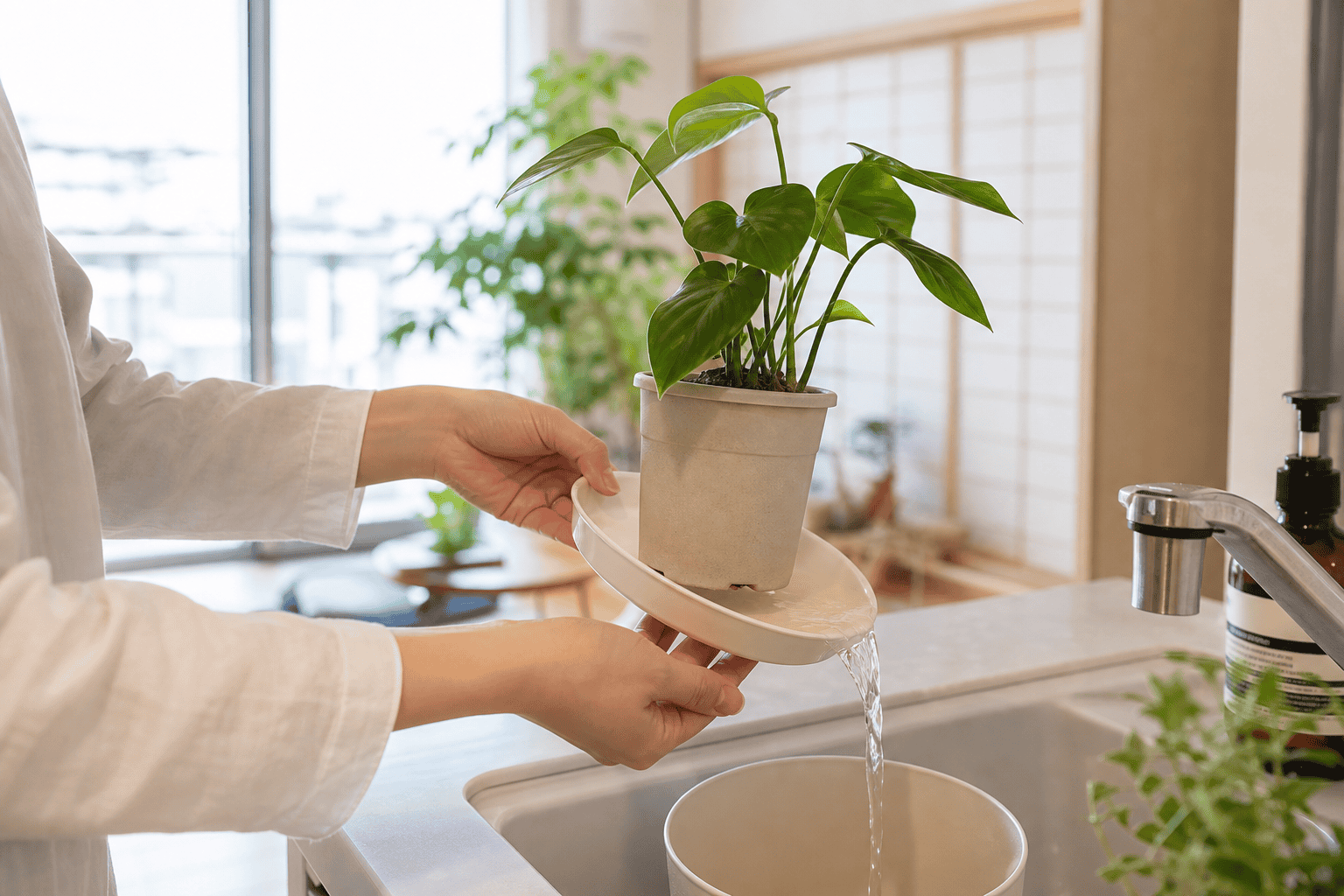
A beginner-friendly routine is to water thoroughly, let the excess finish draining for a few minutes, and then empty the saucer. That keeps the full watering cycle while removing the part that tends to create confusion later.
If the plant is heavy to move, even draining it later the same day is still better than allowing the pot to sit in water overnight.
Cachepots and bottom watering need a different mindset
Water hidden inside a decorative cachepot creates the same risk as water left in a visible saucer, and it is often easier to forget. If you use a cover pot, checking for trapped water needs to become part of the routine.
Bottom watering is different because it is usually done for a limited time and followed by drainage. The safe version is not 'leave the pot soaking' but 'let it absorb briefly, then remove the excess.'
The habits that prevent repeat problems
The more predictable the drying rhythm is, the easier every other care decision becomes. Clean saucers, empty cachepots, and clear separation between watering and standing water all help keep that rhythm readable.
Many indoor plant problems improve not because the owner waters less, but because the leftover water stops interfering with the roots after each watering.
FAQ
Should I empty the saucer every time I water?
In most indoor setups, yes. Let the excess finish draining, then empty the saucer so the bottom of the pot is not left sitting in water.
Is bottom watering the same as leaving water in the saucer?
No. Bottom watering is usually time-limited and followed by drainage, while standing water left behind for hours keeps the root zone wetter than intended.
Does trapped water inside a cachepot matter too?
Yes. Hidden water inside a cover pot can create the same kind of over-wet root zone and is often easier to forget than an open saucer.
Conclusion
For most indoor houseplants, leaving water in the saucer is riskier than it is helpful. Emptying the excess usually makes root conditions clearer and reduces the chance of chronic over-wetness.
The goal is not to water timidly, but to water fully and then remove what the plant should not continue sitting in. That small habit can prevent a surprising number of beginner mistakes.