Search topic: choose pots for houseplants
How to Choose Pots for Houseplants
An English guide to pot size, materials, drainage, and combinations that are easier for beginners to manage indoors.
Key Points
- Why pot size changes watering difficulty
- The main tradeoffs between pot materials
- How drainage affects root health indoors
- Simple pairings that work for beginners
Quick Answer
Pot choice shapes the entire care rhythm of a houseplant. Size, drainage, and drying speed matter more than style alone.
If you want fewer mistakes, choose a pot that helps you read moisture clearly and keeps the root zone from staying wet too long.
Table of Contents
- Why size matters more than people expect
- Comparing common pot materials
- Drainage and indoor practicality
- Reliable beginner combinations
- FAQ
- Conclusion
A pot is not just a design choice. It changes how fast the soil dries, how heavy the setup becomes, and how forgiving the whole routine feels.
This guide helps you choose a pot based on plant behavior and indoor conditions instead of buying only by looks.
Why size matters more than people expect
A pot that is too large holds more wet mix than the roots can use. Indoors, that often leads to slower drying and a higher chance of root trouble.
Choosing one small step up in size is usually safer than making a dramatic jump.
Comparing common pot materials
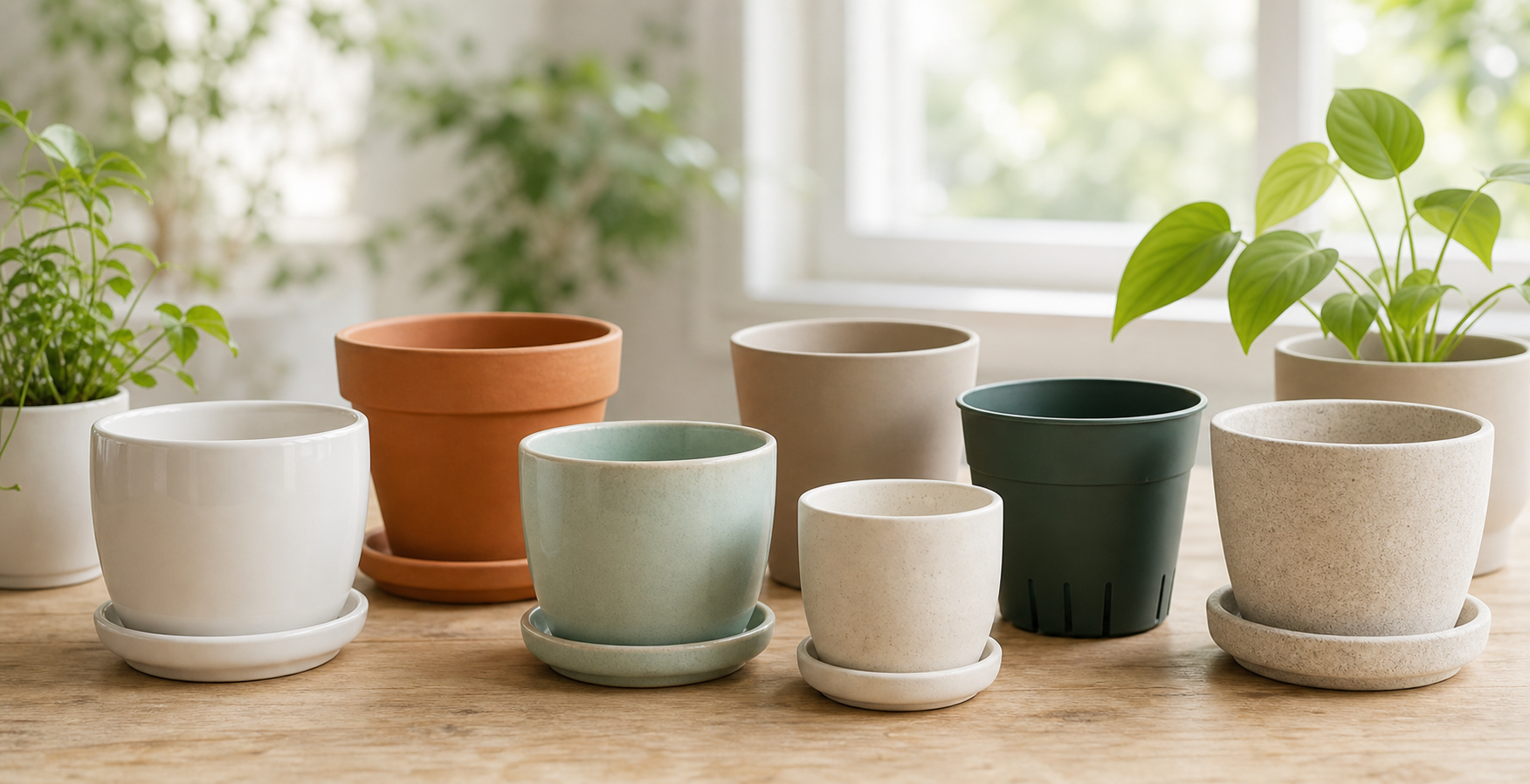
Plastic is light and keeps moisture longer, which can help in dry homes but demands careful watering. Terracotta breathes more and dries faster, which many beginners find easier to read.
Ceramic covers and decorative planters can look great, but they need good drainage management so water does not stay trapped.
Drainage and indoor practicality
Drainage holes are the simplest protection against overwatering. Even if you use a cover pot, the inner pot should still let excess water escape.
For indoor setups, the easiest routine is often a grow pot with drainage placed inside a decorative outer container.
Reliable beginner combinations
Standard leafy plants often do well in a modest plastic nursery pot inside a breathable or decorative outer pot. Dry-loving plants may be easier in terracotta because the mix dries more clearly.
The best pot is the one that makes your watering decisions easier, not the one that looks most expensive.
FAQ
Is a bigger pot always better for growth?
No. Oversizing often creates a wet root zone that is harder to manage indoors.
Do decorative pots need drainage holes?
The outer decorative pot does not have to, but the inner growing pot usually should.
Which material is easiest for beginners?
Many beginners like terracotta for the clearer drying pattern, but plastic also works well if you watch watering carefully.
Conclusion
Pot choice shapes the entire care rhythm of a houseplant. Size, drainage, and drying speed matter more than style alone.
If you want fewer mistakes, choose a pot that helps you read moisture clearly and keeps the root zone from staying wet too long.