Search topic: mushrooms in houseplant soil guide
Mushrooms Growing in Houseplant Soil? When It Is Harmless, When to Worry, and What to Fix
A practical English guide to mushrooms growing in houseplant soil, including why they are not always dangerous, what damp conditions usually cause them, and when surface cleanup is enough versus when repotting is worth considering.
Key Points
- Why small mushrooms in potting soil are not always an emergency
- How long-lasting moisture, organic material, and weak airflow make them more likely
- What to do first before jumping straight to a full soil replacement
- When repeated mushrooms point to a bigger wet-soil problem that needs stronger action
Quick Answer
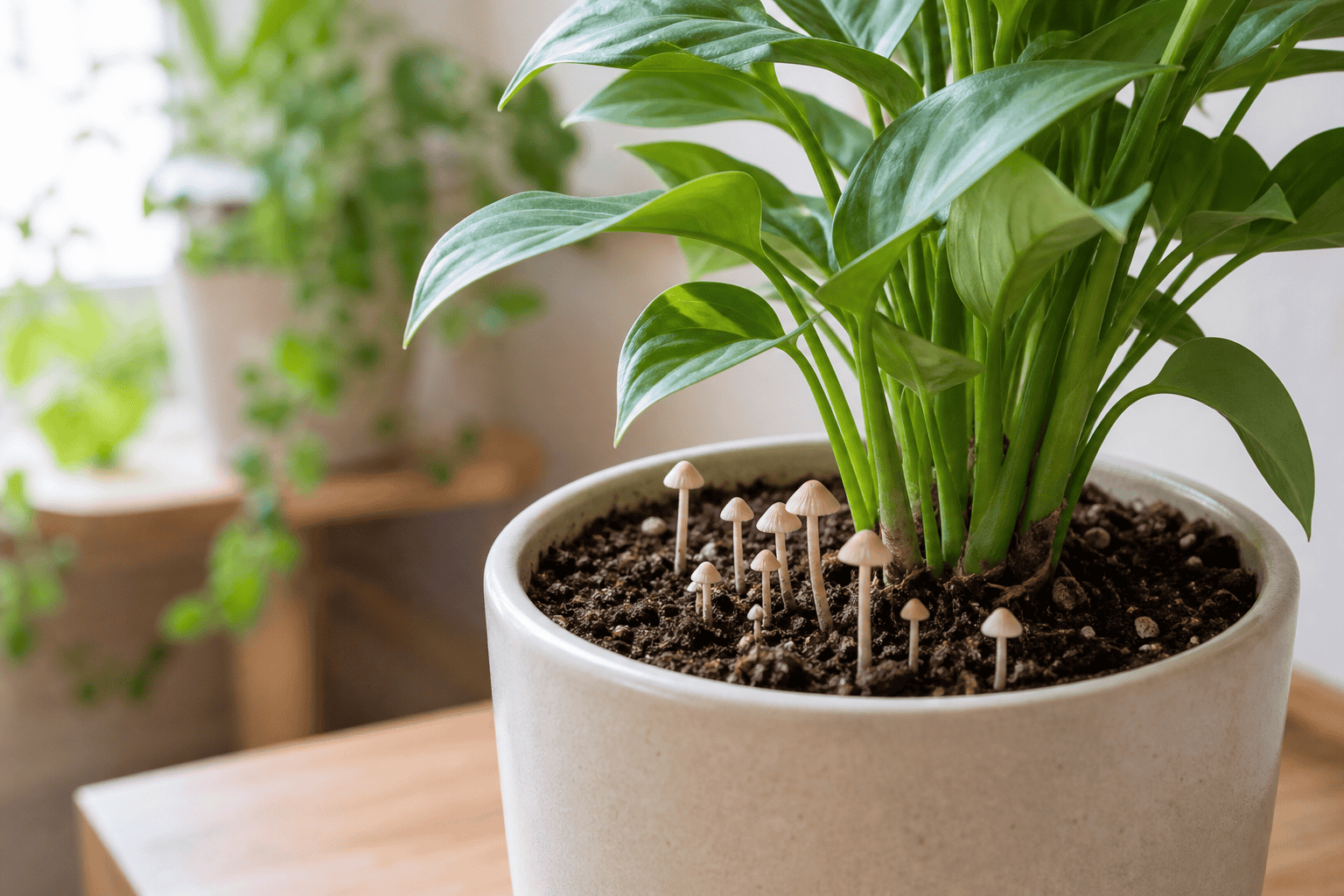
Mushrooms in houseplant soil often look worse than they are, but they should still be treated as a useful clue. They usually point to a pot environment that is staying moist and organic long enough to support visible fungal growth.
If you clean the surface, remove trapped water, and make the drying rhythm easier to read, many cases settle without dramatic intervention. Stronger action is most useful when the symptom keeps returning or comes with other signs of over-wet roots.
Table of Contents
- Why mushrooms in the soil are not always a direct danger
- What kind of pot conditions usually cause them
- What to do first before overreacting
- When repotting becomes a more realistic option
- How to reduce the chances of it happening again
- FAQ
- Conclusion
Finding small mushrooms in a houseplant pot can feel much more alarming than many other surface changes because the visual jump is so sudden. Beginners often assume the plant must already be in danger or that the entire potting mix has gone bad overnight.
In reality, mushrooms themselves are often less important than the conditions that allowed them to appear. They usually point to organic matter plus moisture staying in place long enough for fungal growth to show up. This guide explains how to read that sign calmly and what to correct first.
Why mushrooms in the soil are not always a direct danger
A small flush of mushrooms does not automatically mean the plant is about to decline. Potting mixes often contain bark, composted material, or other organic ingredients, and under the right warm damp conditions those ingredients can support visible fungal growth.
That said, the appearance still matters because it can reveal a drying pattern that is too slow for consistent indoor care. The bigger question is usually not the mushroom species. It is whether the pot has been staying wet too long.
What kind of pot conditions usually cause them
Mushrooms are more likely when the pot holds moisture for long stretches, airflow is weak, and the mix contains plenty of decomposing organic matter. Oversized pots, compacted old soil, trapped saucer water, and dim stagnant corners can all support that setup.
This is why the symptom often overlaps with other moisture-related issues. A plant may still look fairly healthy above the soil while the root zone is drying too slowly underneath.
What to do first before overreacting
The practical first step is to remove the visible mushrooms and fallen pieces, then check whether the pot is still heavy, whether runoff is trapped underneath, and whether the surface stays damp too long. Cleaning the surface and improving the drying rhythm often solve a mild case.
What usually helps less is rushing straight to repeated treatments or a disruptive repot when the plant is otherwise stable. First remove the conditions that keep inviting the mushrooms back.
When repotting becomes a more realistic option
Repotting is more worth considering if mushrooms return quickly, the soil smells bad, the pot stays wet for many days, or leaf yellowing and drooping are appearing at the same time. Those signs suggest the issue may be deeper than a simple surface event.
In that situation, the old mix may be too compact, too decomposed, or too large a moisture reservoir for the current root system.
How to reduce the chances of it happening again
Prevention is mostly about helping the pot move through a clear dry cycle. Water according to pot weight instead of habit, remove trapped runoff, avoid letting old debris accumulate, and give the plant a brighter calmer place with gentle airflow when possible.
If the current mix has become fine and dense, changing it at the next appropriate repot can make future moisture signals easier to read and reduce repeat fungal surface growth.
FAQ
Do mushrooms in houseplant soil immediately harm the plant?
Not always. A small one-time flush is often more of a moisture clue than an immediate emergency, though the care setup should still be reviewed.
Is pulling out the mushrooms enough?
It may help temporarily, but the symptom often returns if the soil stays wet too long and the underlying conditions do not change.
Should I repot right away?
Usually not as a first step. Repot sooner when the mushrooms keep returning, the mix smells bad, the pot stays wet too long, or the plant shows broader decline.
Conclusion
Mushrooms in houseplant soil often look worse than they are, but they should still be treated as a useful clue. They usually point to a pot environment that is staying moist and organic long enough to support visible fungal growth.
If you clean the surface, remove trapped water, and make the drying rhythm easier to read, many cases settle without dramatic intervention. Stronger action is most useful when the symptom keeps returning or comes with other signs of over-wet roots.