Search topic: houseplant drooping leaves guide
Why Are My Houseplant Leaves Drooping? How to Tell Thirst, Root Stress, and Heat Apart
A practical English guide to drooping houseplant leaves, including how to separate underwatering from overwatering, what heat and dry airflow can look like, and which recovery steps are safest for beginners.
Key Points
- Why drooping leaves do not always mean the plant needs more water
- How pot weight, soil moisture, and leaf texture point to different causes
- When heat, strong sun, or dry airflow can mimic watering problems
- A safer step-by-step recovery order for beginners
Quick Answer
Drooping leaves are important, but they do not all mean the same thing. The safest beginner habit is to read the pot and the drying pattern before treating the plant as thirsty.
If you separate dry roots from wet roots and temporary heat stress from deeper decline, you can correct the real cause with much less guesswork and much less risk.
Table of Contents
- Start with the pot, not the leaf alone
- What underwatering usually looks like
- What overwatering or root stress can look like
- When heat and airflow create a false watering signal
- A safer recovery order for beginners
- FAQ
- Conclusion
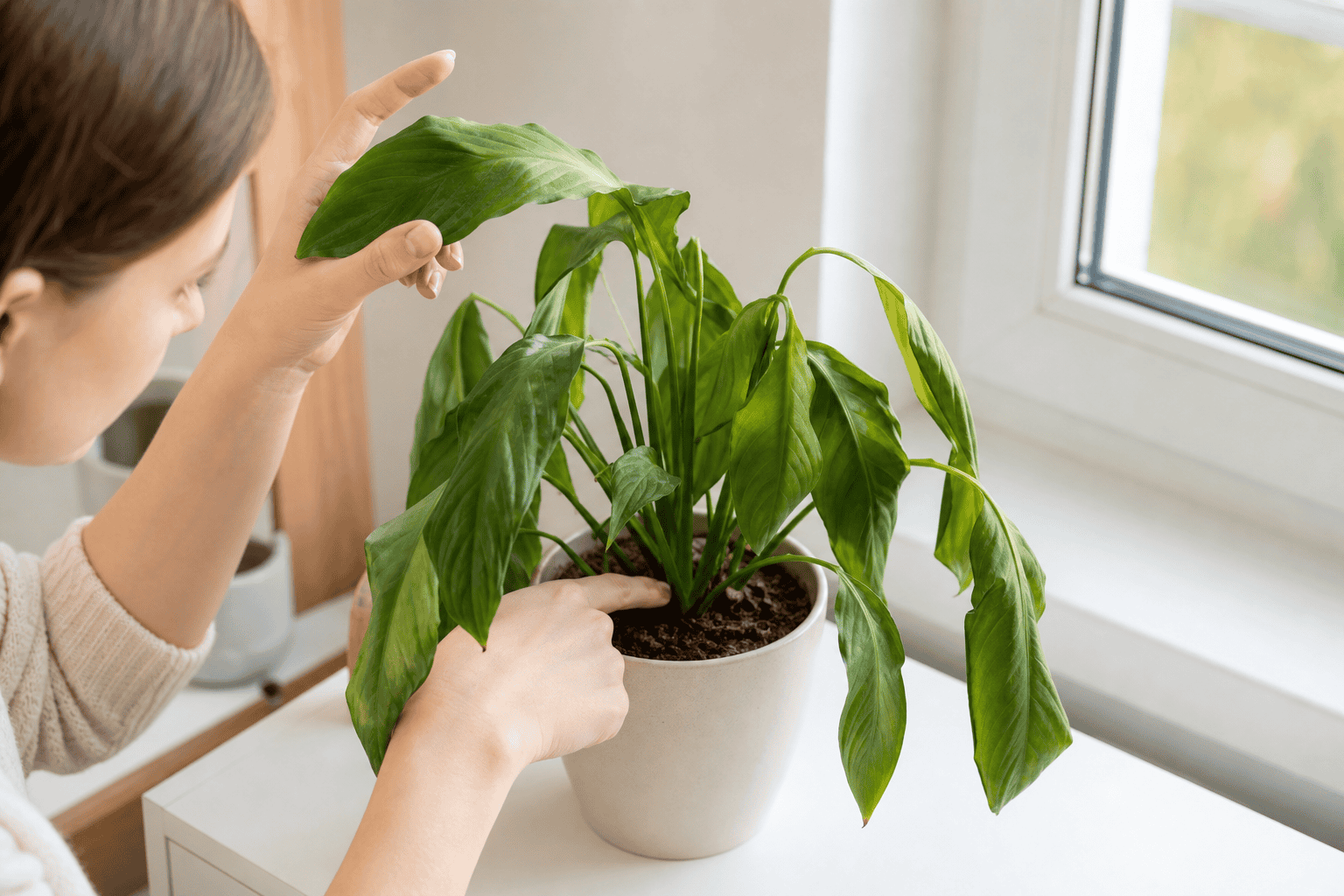
When a houseplant suddenly starts drooping, the first instinct is often to water it immediately. Sometimes that is right, but drooping can also happen when roots are staying too wet, when the room is too hot, or when dry airflow is pulling moisture from the leaves faster than the plant can balance it.
That is why drooping is best treated as a symptom, not a conclusion. This guide explains how to read the pot, the soil, and the room conditions before deciding what kind of help the plant actually needs.
Start with the pot, not the leaf alone
The most useful first check is whether the pot feels light or heavy. If the root ball is clearly dry and the container feels much lighter than usual, thirst is more likely. If the pot is still heavy and damp, adding more water may make the problem worse rather than better.
It also helps to notice whether the whole plant is drooping or only one older leaf. A full-plant slump usually points to a broader water-balance issue, while a single tired leaf can simply be aging out.
What underwatering usually looks like
Plants that are drooping from thirst often have light pots, dry soil, and leaves that feel softer and less firm than normal. In warm weather, some plants may look more tired by late afternoon and perk up again after a proper watering and cooler evening conditions.
In that case, the practical fix is a thorough watering until excess drains out, followed by emptying the saucer. The goal is to rehydrate the root ball fully, not to give a small splash that leaves the center dry.
What overwatering or root stress can look like
A drooping plant with a heavy pot is different. If the soil stays wet for many days, the roots may not be functioning well enough to move water upward, even though there is plenty of moisture in the container. Yellow lower leaves, stale smell, or a pot that never seems to lighten all support this possibility.
Beginners often make the mistake of watering again because the leaves look thirsty. When the pot is already wet, that response can deepen the root stress.
When heat and airflow create a false watering signal
Strong summer light, hot windowsills, and direct AC airflow can all make leaves droop temporarily. The soil may not be bone dry, yet the leaves still struggle because moisture is being lost quickly or the root zone is under temperature stress.
If the plant worsens during the hottest part of the day but improves by morning, review placement before increasing watering frequency. Moving it out of hard afternoon sun or dry direct airflow often helps more than extra water.
A safer recovery order for beginners
A practical order is simple: check pot weight, decide whether the plant is actually dry, improve the placement, and then watch how the leaves respond through the next half day or full day. That sequence prevents panic watering and reduces the chance of stacking stress on already weak roots.
Fertilizer and emergency repotting should usually come later, not first. In many cases, clearer observation solves more than quick intervention.
FAQ
Should I always water a drooping houseplant right away?
No. If the pot is still heavy and damp, the droop may be linked to overwatering or root stress instead of thirst.
Is it normal for leaves to droop only in the afternoon?
It can happen in hot weather or strong light. If the plant recovers by the next morning, placement stress may be a better explanation than severe dehydration.
Does one drooping leaf mean the whole plant is in trouble?
Not necessarily. One older leaf may simply be aging, while whole-plant drooping is more likely to reflect a broader watering or root problem.
Conclusion
Drooping leaves are important, but they do not all mean the same thing. The safest beginner habit is to read the pot and the drying pattern before treating the plant as thirsty.
If you separate dry roots from wet roots and temporary heat stress from deeper decline, you can correct the real cause with much less guesswork and much less risk.