Search topic: houseplant air conditioner airflow
Is Air Conditioner Air Bad for Houseplants? Dry Leaf Tips and Placement Fixes
A practical English guide to direct AC airflow on houseplants, including how to spot dry-leaf stress, move the plant, and adjust watering without overcorrecting.
Key Points
- What direct AC airflow usually looks like on leaves
- How to tell airflow stress from sunburn or root problems
- The safest way to move the plant without losing light
- Watering and humidity adjustments that actually help
Quick Answer
The real problem is rarely the air conditioner itself. What stresses the plant is the repeated blast of dry moving air from the same direction.
Once you protect the leaves from direct airflow and keep the light acceptable, most plants stabilize without dramatic rescue steps.
Table of Contents
- What AC airflow stress usually looks like
- How to separate it from other problems
- The best placement changes to try first
- How to adjust watering without overdoing it
- FAQ
- Conclusion
A houseplant can start looking tired even when your watering routine has not changed. In small rooms, the quiet cause is often direct airflow from cooling or heating.
This guide explains the most common signs of airflow stress, how to confirm it, and how to correct the setup before the plant declines further.
What AC airflow stress usually looks like
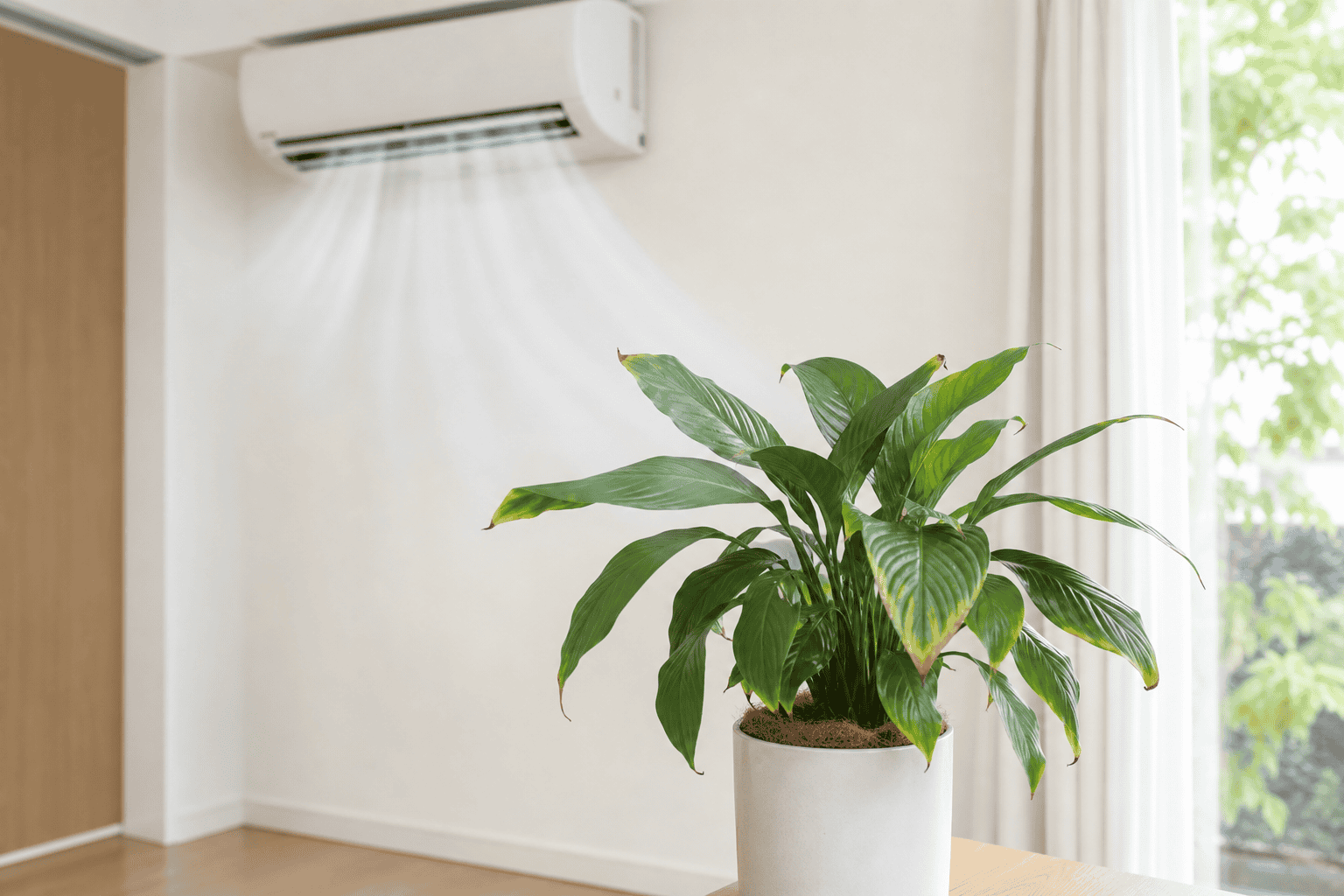
The earliest clue is often dryness at the leaf tip or edge rather than a whole-plant collapse. You may also notice that one side of the plant looks worse than the other because the airflow hits the same leaves every day.
The top layer of soil may dry unusually fast while the deeper root zone still feels moist. That mix of dry leaves and uneven drying can make the problem easy to misread as simple underwatering.
How to separate it from other problems
Airflow damage tends to match the direction of the vent. Sunburn is more likely on the bright side of the plant, while root rot usually comes with soil that stays heavy, cold, or sour-smelling.
If new growth starts looking better after a small move away from the vent path, that is a strong sign that airflow was a real part of the issue.
The best placement changes to try first
Start by moving the plant out of the direct line of the unit rather than sending it to a dark corner. Even shifting it one or two meters can be enough if the room has decent indirect light.
Aim for a spot where the leaves do not visibly move when the system runs. If you use a fan or circulator, keep the air moving around the room instead of pushing it straight at the foliage.
How to adjust watering without overdoing it
Do not jump straight to watering more often just because the leaf tips are dry. Fix the placement first, then watch how fast the pot actually loses weight and how the soil behaves over several days.
Light daytime misting can support humidity in some rooms, but it is not a substitute for moving the plant out of constant direct airflow.
FAQ
Should I never place a houseplant in a room with air conditioning?
You can still keep plants in air-conditioned rooms. The goal is simply to keep them out of the direct path of the vent.
Should I water more if the leaves look dry from AC air?
Not automatically. Correct the placement first, then adjust watering only if the full pot is actually drying faster than before.
Is heating airflow in winter just as risky?
Yes. Heated air is often even drier, so leaf tip damage can build up more quietly over time.
Conclusion
The real problem is rarely the air conditioner itself. What stresses the plant is the repeated blast of dry moving air from the same direction.
Once you protect the leaves from direct airflow and keep the light acceptable, most plants stabilize without dramatic rescue steps.